
Cao Shunli
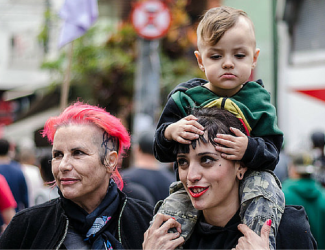
Over the past few years, a troubling new trend at the international human rights level is being observed, where discourses on ‘protecting the family’ are being employed to defend violations committed against family members, to bolster and justify impunity, and to restrict equal rights within and to family life.
The campaign to "Protect the Family" is driven by ultra-conservative efforts to impose "traditional" and patriarchal interpretations of the family, and to move rights out of the hands of family members and into the institution of ‘the family’.
Since 2014, a group of states have been operating as a bloc in human rights spaces under the name “Group of Friends of the Family”, and resolutions on “Protection of the Family” have been successfully passed every year since 2014.
This agenda has spread beyond the Human Rights Council. We have seen regressive language on “the family” being introduced at the Commission on the Status of Women, and attempts made to introduce it in negotiations on the Sustainable Development Goals.
AWID works with partners and allies to jointly resist “Protection of the Family” and other regressive agendas, and to uphold the universality of human rights.
In response to the increased influence of regressive actors in human rights spaces, AWID joined allies to form the Observatory on the Universality of Rights (OURs). OURs is a collaborative project that monitors, analyzes, and shares information on anti-rights initiatives like “Protection of the Family”.
Rights at Risk, the first OURs report, charts a map of the actors making up the global anti-rights lobby, identifies their key discourses and strategies, and the effect they are having on our human rights.
The report outlines “Protection of the Family” as an agenda that has fostered collaboration across a broad range of regressive actors at the UN. It describes it as: “a strategic framework that houses “multiple patriarchal and anti-rights positions, where the framework, in turn, aims to justify and institutionalize these positions.”
Other useful links to stay informed:
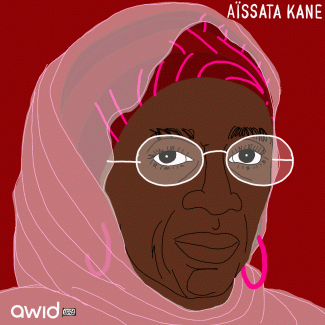
Aïssata Kane, surnommée affectueusement “Yaye Kadia” (Mère Kadia), a de tout temps été une féministe engagée dans la défense des droits des femmes africaines, et particulièrement mauritaniennes.
Au cours de sa carrière politique, en 1975, elle fut nommée ministre de la protection de la famille et des affaires sociales et travailla avec ardeur à l’amélioration du statut des femmes dans son pays; c’était la première fois qu'une femme occupait un tel poste.
Ce travail consista notamment à promouvoir l’éducation des filles et des femmes, à lutter contre la pratique du gavage sur les jeunes femmes, à faire pression pour l’inclusion d’une disposition sur les droits maritaux et à plaider en faveur de la création d’un quota de représentation féminine au Parlement.
“[Aïssata] a réalisé toutes ses passions avec humilité, courage et détermination. Elle ne voulait déranger personne avec ce combat qu’elle menait sur tous les fronts à la fois.” Ball Halimata Dem, la nièce d’Aïssata
Ayant fondé l'Union nationale des femmes de Mauritanie (UNFM), elle avait cocréé et publié pour elles le magazine Marienou, dédié à l’émancipation des femmes mauritaniennes. Aïssata dirigea également plusieurs organisations sous-régionales et locales, notamment en tant que présidente de l'Association internationale des femmes francophones (AIFF) et, en écologiste résolue, fut présidente de l'Association pour la protection de l'environnement en Mauritanie (APEM).
En 2018, on lui décerna le Prix de la Femme africaine pionnière. Ce prix honore son engagement à faire progresser le statut de la femme en Mauritanie et reconnaît son grand leadership et son sens de l'innovation.
Aïssata est décédée le 10 août 2019.
In 2013, we published three global reports. These reports confirm that women’s rights organizations are doing the heavy lifting to advance women’s rights and gender equality by using diverse, creative and long-term strategies, all while being underfunded.
Our 2010 global survey showed that the collective income of 740 women’s organizations around the world totaled only USD 104 million. Compare this with Greenpeace International, one organization with a 2010 budget of USD 310 million1. Imagine the impact these groups could have if they were able to access all the financial resources they need and more?
AWID’s WITM research has catalyzed increased funding for women’s rights organizing. WITM research was a driving force behind the Catapult crowdfunding platform, which has raised USD 6.5 million for women’s rights. The Dutch Government cited WITM research as a reason for its unprecedented MDG 3 Fund of EU 82 million. WITM research has also led to the creation of several new funds: FRIDA – The Young Feminist Fund, the Indigenous Women’s Fund, Fundo Elas, the Mediterranean Women’s Fund and the Rita Fund.
While the WITM research has shed important light on the global funding landscape, AWID and partners have identified the need to dig deeper, to analyze funding trends by region, population and issue. In response, organizations are now using AWID’s WITM research methodology to do their own funding trends analyses. For example, in November 2013, Kosova Women’s Network and Alter Habitus – Institute for Studies in Society and Culture published Where is the Money for Women’s Rights? A Kosovo Case Study.
At the same time, AWID continues to collaborate with partners in Where is the Money for Indigenous Women’s Rights (with International Indigenous Women’s Forum and International Funders for Indigenous Peoples) and our upcoming Where is the Money for Women’s Rights in Brazil? (with Fundo Elas).
Several organizations have also conducted their own independent funding trends research, deepening their understanding of the funding landscape and politics behind it. For example, the South Asian Women’s Fund was inspired by AWID’s WITM research to conduct funding trends reports for each country in South Asia, as well as a regional overview. Other examples of research outside of AWID include the collaboration between Open Society Foundations, Mama Cash, and the Red Umbrella Fund to produce the report Funding for Sex Workers Rights, and the first-ever survey on trans* and intersex funding by Global Action for Trans* Equality and American Jewish World Service.
Pour toutes questions liées à l’Appel aux propositions d'activités, merci de nous contacter via notre formulaire de contact en choisissant « Proposition d'activité » comme sujet de votre message.
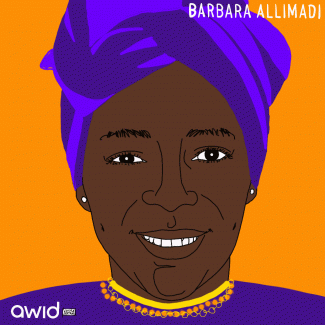
Barbara Allimadi was a political and human rights activist from Uganda. In 2012, she co-organized a protest against a televised police assault of Ingrid Turinawe, an opposition politician who had her breast squeezed by a police officer.
During the protest, Barbara, along with other fellow activists stripped to their bras in front of the Central Police Station in Kampala. This came to be known as the infamous ‘bra protest’ in Uganda.
“We settled on the bra protest. We thought it would be most appropriate for what had happened. It’s not like we were saying we don’t respect ourselves. We were disgusted by what had been done.” - Barbara Allimadi, 2013 (Daily Monitor)
With a Degree in Electronics and Communications Engineering from the London Metropolitan University, Barbara was a network engineer in the United Kingdom and an avid fan of reggae music. She returned to Uganda In 2007, when her mother passed away.
In 2019, she was appointed Coordinator for International and Diaspora Affairs at the Alliance for National Transformation (ANT), a political party launched that year by an opposition leader.
“We want security of life and property, not pain, injury and even death at the hands of security forces who are meant to protect us. Most importantly, we want a stable and enabling environment where we can realize our dreams and aspirations.” - Barbara Allimadi, ANT video
Barbara passed away on 27 April 2020.
“I was so proud of my sister for many things but in particular her fearless pursuit of peace, democracy, justice and equality in Uganda. At the height of her activism she led many marches on the streets of Kampala, to police stations, and Parliament.” - Doris Allimadi, Barbara’s sister
“It is with deep sadness that we have learnt of the untimely passing of Barbara Allimadi. She has been a valiant, relentless and courageous force for the liberation movement of Uganda. Our deepest condolences to her family. She will be sorely missed.” - Akina Mama wa Afrika (tweet on 28 April 2020)
“The passing on of Barbara is so sad for us and her entire family. She dedicated herself to fighting for justice, freedom and rights of others while serving in the civil society until she recently joined us at the party.” Maj Gen Mugisha Muntu, ANT national coordinator
“A beautiful, charming, funny, charismatic and inspirational sister. My children lost their aunty. Uganda lost a brave and courageous freedom fighter. Barbara once said, ‘As long as there is still breath in you, keep working towards your dreams.’” - Doris Allimadi, Barbara’s sister
A latin-american gender identity
The term travesti is often mistakenly translated as "transvestite" in English. However, it is a Latin American gender identity with no equivalent in other languages, and exclusively female. It is a person designated male at birth who identifies as female. They may or may not undergo bodily changes, and should always be addressed with she/her pronouns.
Travesti is not only a gender identity located outside of gender binarism, it is also a cultural identity rooted in Latin American movements. The term was initially pejorative, but it was later re-appropriated as a symbol of resistance and dignity.
Every travesti is trans because she does not identify with the gender designated at birth, however not every travesti considers themselves as a trans woman, since travesti is already a gender identity on its own.
Source: Berkins, Lohana. (2006). Travestis: una Identidad Política [Travestis: a Political Identity]. Trabajo presentado en el Panel Sexualidades contemporáneas en las VIII Jornadas Nacionales de Historia de las Mujeres/ III Congreso Iberoamericano de Estudios de Género Diferencia Desigualdad. Construirnos en la diversidad, Villa Giardino, Córdoba, 25 al 28 de octubre de 2006.
Now that you have analyzed all your data – from your survey, interviews, desk research and potentially other sources – you can create your final product.
In this section:
- Create your final product
1. Write clearly
2. Make it pretty- Gather review and inputs
1. Polish your results
2. Facilitate the feedback
Your final product will be the document that will summarize, analyze and criticize your data. That will be the piece that you will share with your community to present and explain your research to your audience.
At AWID, we often write a comprehensive written report that analyzes each set of data and synthesizes all of our findings, then later create smaller products, such as infographics and summaries (explained in the subsequent section “Finalize and format”).
Importance of the editor
An editor will proofread, ensure concise writing, conduct fact-checking, point out inconsistencies that need to be resolved, arrange the flow of the document and possibly suggest titles.
Your editor should preferably be someone who understands and knows your WITM work but who was not directly involved in the research. This will bring in a fresh perspective.
Use the data collected to create graphs and tables. These type of visuals are a compelling way to highlight the main findings of your research and validate your analysis.
Source relevant images that can illustrate your report.
Highlight key-numbers and/or powerful testimonials.
Remember: The more accessible your product is, the more people will want to read (and share!) it.
At this point, you have collected all your data, analyzed it and transformed it into your final product, likely in a long report.
Before moving on to the next steps – you should share your final research product with your advisor organizations, activists, and donors.
This is a great moment to check the following points:
Once you have inputted all feedback from your advisors, be sure to run it by your editor once more.
This will now be the final, completed version of your report. If you intend to publish the final report in other languages, now is the time to send it for translation.
This is a significant contribution from your advisors. Consider offering them some form of recognition.

• 2 - 5 months
• 1 or more research person(s)
• 1 Editor (or web-editor if you create an online product)
• Translator(s), if done in more than one language
• List of advisor organizations, activists, and donors.
• Concept note (from “Frame your research” section)
• Survey topline results
• Prepared interview questions
• Interview results
• Desk research data
• All other data used in report
คุณสามารถคาดหวังว่าจะมีอุปกรณ์มาตราฐานสำหรับกิจกรรมและการนำเสนอเตรียมไว้ให้ ได้แก่ กระดาษฟลิปชาร์ท ปากกามาร์กเกอร์ โพสต์อิท รวมถึง โปรเจคเตอร์ อุปกรณ์ด้านภาพและเสียง อุปกรณ์เพิ่มเติมนอกเหนือจากนี้ถือเป็นความรับผิดชอบของผู้จัดกิจกรรม ฝ่ายโลจิสติกส์ AWID จะพร้อมที่จะตอบคำถามและให้คำแนะนำต่างๆ
Cette information ne sera disponible qu’à l’ouverture de l’inscription.
Una de las líderes fundadoras de la cooperativa fue Lohana Berkins, activista, defensora y promotora de la identidad trans. Lohana jugó un papel crucial en la lucha por los derechos de las personas trans y travesti.
A través de su lucha se consiguió, entre muchas otras cosas, la aprobación de la Ley de Identidad de Género. Es una de las legislaciones más progresistas del mundo, garantizando derechos fundamentales a las personas trans y travestis. Ahora, las personas pueden cambiar sus nombres y géneros solo con una declaración jurada, y tener acceso a atención médica integral sin intervención/aprobación judicial o médica (Outright International, 2012).
En el contexto actual, hemos identificado cinco grandes amenazas para la lucha por economías feministas y justas.
«La financialización alude a la importancia creciente de los mercados financieros, los motivos financieros, las instituciones financieras y las elites financieras en el manejo de la economía y las instituciones que la rigen tanto a nivel nacional como internacional» - Gerald Epstein
Epstein Gerald A. 2006: Financialization and the World Economy. Edward Elgar Publishing.
Las instituciones financieras ejercen una fuerte influencia sobre la gobernabilidad económica y la dirección que toman las políticas para el desarrollo. La influencia cada vez más acentuada que tienen el sector corporativo y las instituciones financieras internacionales en la definición de políticas públicas locales y globales ha resultado en Estados cada vez más presos de los intereses del capital. El sistema financiero actual, con sus políticas controversiales de crédito y deuda, juega un rol fundamental para la reproducción y la expansión de los procesos de acumulación de capital.
Esto plantea preguntas importantes acerca de cómo regular y repensar el sistema financiero global, no solo para evitar las graves consecuencias negativas de las crisis causadas por las deudas sino también para permitir medios de vida sostenibles y la realización de los derechos económicos y sociales sin retrocesos.
(Para más detalles, ver el artículo de Balakrishnan y Heintz “Debt, Power, and Crisis: Social Stratification and the Inequitable Governance of Financial Markets”, en inglés [Deuda, poder y crisis: Estratificación social y la gobernabilidad inequitativa de los mercados financieros]
En estos últimos 20 años, los acuerdos comerciales (tanto bilaterales como multilaterales) han expandido su rol mostrando un interés cada vez mayor en el otorgamiento de derechos de propiedad intelectual a las corporaciones.
Estos derechos han beneficiado claramente a las corporaciones transnacionales afectando gravemente la posibilidad de que las naciones y pueblos más empobrecidos puedan realizar sus derechos humanos, en particular
Además, la liberalización de las importaciones agrícolas que resulta en una afluencia de bienes baratos pone en peligro a las mujeres campesinas que trabajan en forma autónoma en países empobrecidos y a la seguridad alimentaria de todxs. Las cláusulas de protección a las inversiones que forman parte de los acuerdos comerciales limitan el espacio político para que los gobiernos nacionales promulguen e implementen regulaciones en asuntos tan críticos como la protección ambiental, los derechos laborales y la duración de las patentes.
Los movimientos feministas han estado, y continúan estando, en la primera línea de resistencia a estos acuerdos, denunciando las trampas que encierran.
(Ver por ejemplo, las reacciones de movimientos sociales y redes feministas de todo el mundo frente a las negociaciones del Tratado Trastlántico de Comercio e Inversiones y del Acuerdo de Asociación Transpacífico)
La mercantilización de los recursos de la Tierra y sus consecuencias — la degradación ambiental y el cambio climático producidos por décadas de industrialización agresiva, despojo y extractivismo de los recursos mundiales — han dañado la biodiversidad y la resiliencia ecológica. Estos daños ya están amenazando la mera existencia de la sociedad humana.
La comunidad internacional no ha logrado enfrentar los patrones de producción y consumo que conforman la raíz misma de este problema. Lo que hicieron los gobiernos — con el apoyo de las grandes empresas a quienes les interesa obtener ganancias — fue optar por el enfoque de la «economía verde» que promueve las «tecnologías energéticamente eficientes» (como la energía nuclear, los biocombustibles, los organismos genéticamente modificados y la geoingeniería) y los esquemas de comercio de emisiones de dióxido de carbono como soluciones mágicas.
Si bien los procesos de apropiación de tierras y recursos no son algo nuevo -de hecho, han sido luchas centrales en la historia colonial- lo que sí es nuevo son los medios de avanzada por los cuales la tierra y los recursos naturales se están volviendo mercancías en nuevos mercados.
Las instituciones financieras internacionales desempeñan un rol central en promover la mercantilización de la tierra en los países en desarrollo. Estas instituciones financian reformas agrarias que les permiten a actores poderosos utilizar la tierra para ganancias especulativas a cambio de magras promesas de empleos y crecimiento. La apropiación de tierras tiene impactos negativos de gran alcance sobre el acceso de los pueblos a bienes y servicios esenciales, además de causar desplazamiento de poblaciones y degradación ambiental.
Quienes se están resistiendo a la apropiación de tierras, incluyendo a las defensoras de derechos humanos, se enfrentan todos los días a distintas formas de violencia que van desde las agresiones físicas a los abusos sexuales.
Esta base patriarcal tiene una hegemonía particular en los modelos neoliberales actuales.
Resulta evidente que la economía política y el desarrollo se vinculan de varias formas con la sexualidad y el género: pensemos en cómo define el capitalismo lo que se puede entender como 'trabajo' y cómo el valor de los seres humanos se define a partir de su productividad en el trabajo rentado.
En la mayoría de los casos, el lugar que ocupan las mujeres en la economía mundial continúa siendo el de trabajadoras explotadas por su género ya que su trabajo está devaluado en los empleos precarios, la subsistencia doméstica, la reproducción y la producción no remunerada en el hogar. Naturalizada como trabajo no remunerado de las mujeres, la labor que permtie la reproducción de la fuerza de trabajo le provee un enorme subsidio al capitalismo a la vez que funciona como fuente de opresión y sometimiento de género.
Esta situación se ve agravada por el hecho de que cuando los mecanismos de protección social comienzan a debilitarse, se incrementa la carga laboral de las mujeres.
El fenómeno de la migración global que encarnan miles de refugiadxs económicxs que escapan de la pobreza que lxs oprime no es ajeno a las relaciones de poder entre los géneros que impone el capitalismo. Las remesas se convierten en una de las principales fuentes del financiación para el desarrollo de familias y comunidades, pero tienen un costo enorme para las mujeres migrantes que se esfuerzan por alcanzar un salario que les permita vivir en su nuevo país.
También estamos viendo cómo los sistemas patriarcales capitalistas están utilizando la violencia y la opresión para mantener su estatus quo. El alza del gasto mundial para sostener el militarismo y la violencia, perpretados ambos por actores estatales y no estatales, se vuelca cada vez más a controlar el disenso, los cuerpos y voces de las mujeres, así como a zanjar disputas económicas, políticas y sociales.
En todo el mundo, la violencia, el encarcelamiento y la discriminación afectan de manera desproporcionada a:
Para confrontar la violencia estructural y sus vínculos con el sistema global capitalista, se necesita un análisis interseccional que relacione entre sí el género, la raza, la etnia, la edad, la capacidad, la nacionalidad, la orientación sexual y la identidad de género entre otras categorías.
La profunda crisis de gobernabilidad mundial que vivimos también se expresa en los débiles acuerdos intergubernamentales a los que se logra llegar y que a menudo carecen de los mecanismos más básicos para la rendición de cuentas. El sistema multilateral que antes le fue útil a la gobernabilidad mundial no está logrando responder a las múltiples crisis actuales. El sistema mismo continúa siendo muy poco democrático, con las corporaciones adquiriendo cada vez más presencia y más poder ya que ocupan los espacios donde antes estaban los Estados.
Estas amenazas nos desafían a lxs feministas a repensar nuestro marco de referencias y nuestras estrategias. Y también a renovar y reactivar nuestro compromiso con la construcción de movimientos junto con otrxs por una economía justa.
Nos desafían a pensar agendas más amplias por las transformaciones socioeconómicas desde una perspectiva feminista, atendiendo a las realidades que viven la mayoría de lxs empobrecidxs. Ahora es el momento de lograr cambios por una economía justa y de hacerle frente a los desafíos sistémicos persistentes.
نحن نراقب هذه المخاطر والمخاطر الأخرى بعناية، وسننشر معلومات شاملة عن الصحة والسلامة عند فتح التسجيل، حتى تتمكن/ين من اتخاذ القرار. بالإضافة إلى ذلك، تم تصميم التنسيق الهجين لتوفير تجربة مشاركة هادفة للمشاركين/ات الذين/ اللواتي يفضلون عدم السفر أو غير القادرين على السفر.
Anglais, français, espagnol et chinois mandarin.