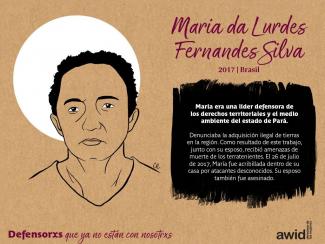
Maria da Lurdes Fernandes Silva
Over the past few years, a troubling new trend at the international human rights level is being observed, where discourses on ‘protecting the family’ are being employed to defend violations committed against family members, to bolster and justify impunity, and to restrict equal rights within and to family life.
The campaign to "Protect the Family" is driven by ultra-conservative efforts to impose "traditional" and patriarchal interpretations of the family, and to move rights out of the hands of family members and into the institution of ‘the family’.
Since 2014, a group of states have been operating as a bloc in human rights spaces under the name “Group of Friends of the Family”, and resolutions on “Protection of the Family” have been successfully passed every year since 2014.
This agenda has spread beyond the Human Rights Council. We have seen regressive language on “the family” being introduced at the Commission on the Status of Women, and attempts made to introduce it in negotiations on the Sustainable Development Goals.
AWID works with partners and allies to jointly resist “Protection of the Family” and other regressive agendas, and to uphold the universality of human rights.
In response to the increased influence of regressive actors in human rights spaces, AWID joined allies to form the Observatory on the Universality of Rights (OURs). OURs is a collaborative project that monitors, analyzes, and shares information on anti-rights initiatives like “Protection of the Family”.
Rights at Risk, the first OURs report, charts a map of the actors making up the global anti-rights lobby, identifies their key discourses and strategies, and the effect they are having on our human rights.
The report outlines “Protection of the Family” as an agenda that has fostered collaboration across a broad range of regressive actors at the UN. It describes it as: “a strategic framework that houses “multiple patriarchal and anti-rights positions, where the framework, in turn, aims to justify and institutionalize these positions.”

The key objective of the WITM survey is to shine light on the financial status of diverse feminist, women’s rights, gender justice, LBTQI+ and allied movements globally. Based on this, we hope to further strengthen the case for moving more and better money, as well as shift power, to feminist movements.
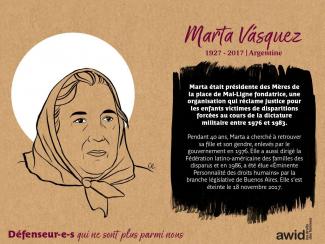
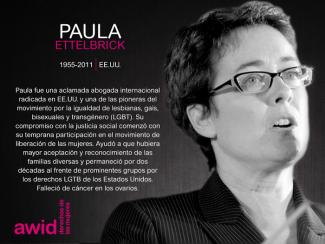
Estudiantes, escritoras, lideresas, activistas. Cada una de las cuatro mujeres que honramos a continuación encaró el activismo a su manera. Sin embargo, todas tuvieron en común la promoción y defensa de los derechos de lesbianas, gays, personas bisexuales, trans*, queer e intersex. Únete a nosotras para recordar y honrar a estas defensoras de derechos humanos, su trabajo y su legado, compartiendo los memes aquí incluidos con tus colegas, amistades y redes; y tuiteando las etiquetas #WHRDTribute y #16Días.
Por favor, haz click en cada imagen de abajo para ver una versión más grande y para descargar como un archivo.


No. Solicitamos una sola respuesta a la encuesta por agrupación.
“Los saberes y prácticas indígenas siempre han apoyado la soberanía alimentaria, y ese saber está en manos de las mujeres […] El ecofeminismo para mí es el respeto por todo lo que tenemos a nuestro alrededor” -
Prior to her retirement, she held many high profile positions including member of the Court of Appeal of Uganda and Deputy Chief Justice of Uganda. She was the first Ugandan woman to hold the position of Chief Magistrate between 1973 and 1986 and the first woman to be appointed High court judge in 1986.
She was one of the first ever women papal knights in the history of the Catholic Church in Africa. She died of a heart attack.
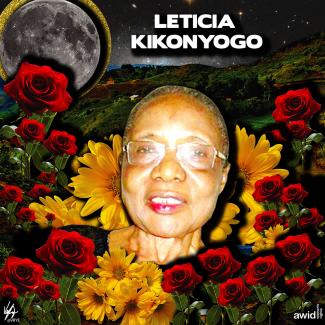
Ces femmes transgenres ont été assassinées en raison de leur activisme et de leur identité de genre. Les lois reconnaissant les droits des personnes trans* sont insuffisantes et, lorsqu’elles existent, les mesures prises pour protéger les droits de ces personnes sont quasi inexistantes. Nous vous invitons à vous joindre à nous pour honorer la mémoire de ces défenseuses, leur activisme et l’héritage qu’elles nous ont laissé. Faites circuler ces mèmes auprès de vos collègues et amis ainsi que dans vos réseaux et twittez en utilisant les hashtags #WHRDTribute et #16Jours.
S'il vous plaît cliquez sur chaque image ci-dessous pour voir une version plus grande et pour télécharger comme un fichier


Sauf si vous avez des problèmes d’accessibilité et/ou que vous répondez aux questions de l’enquête dans une autre langue, nous vous encourageons fortement à utiliser KOBO pour une collecte et une analyse standardisées des données WITM.
Un lieu de travail n'a pas à fonctionner sur la base de la concurrence et du profit. Un lieu de travail ne devrait pas exploiter les gens au profit d’autrui. C’est pourquoi les communautés marginalisées en dehors des économies formelles construisent des modèles coopératifs alternatifs basés sur l'autonomie, la coopération, la coresponsabilité, l'autogestion et la solidarité.
Les lieux de travail et coopératives autogérés par les travailleur·euses ont toujours offert d'autres moyens de générer des opportunités d'emploi, des revenus, une sécurité sociale et des épargnes, tout en distribuant les revenus de manière plus communautaire, durable et sûre.
Mais le coopérativisme c'est bien plus qu'une opportunité d'emploi: c'est la réalisation des rêves et la construction d’économies féministes basées sur la solidarité et l'entraide. C'est la création d’un monde où nos vies, notre travail et nos communautés comptent.
Voici l'histoire de la Coopérative Textile Nadia Echazú, la première coopérative créée et dirigée par et pour les personnes travesti et trans en Argentine.
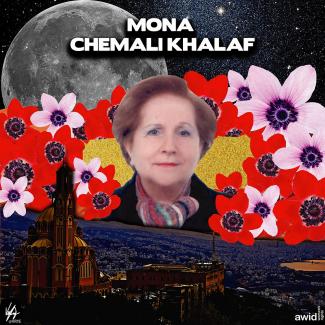
Mona fue una economista y consultora independiente sobre temas de género y desarrollo.
Fue profesora de economía y Directora del Institute for Women's Studies in the Arab World de la Lebanese American University. Falleció repentinamente el 6 de enero de 2018.
Sus amigxs y ex-colegas dicen sobre Mona: «Cuando celebramos su vida, lo mejor que podemos hacer es comprometernos a continuar con lo que ella empezó: la igualdad de género, indefectiblemente.