Philippe Leroyer | Flickr (CC BY-NC-ND 2.0)

Women Human Rights Defenders

WHRDs are self-identified women and lesbian, bisexual, transgender, queer and intersex (LBTQI) people and others who defend rights and are subject to gender-specific risks and threats due to their human rights work and/or as a direct consequence of their gender identity or sexual orientation.

WHRDs are subject to systematic violence and discrimination due to their identities and unyielding struggles for rights, equality and justice.

The WHRD Program collaborates with international and regional partners as well as the AWID membership to raise awareness about these risks and threats, advocate for feminist and holistic measures of protection and safety, and actively promote a culture of self-care and collective well being in our movements.


Risks and threats targeting WHRDs  

WHRDs are exposed to the same types of risks that all other defenders who defend human rights, communities, and the environment face. However, they are also exposed to gender-based violence and gender-specific risks because they challenge existing gender norms within their communities and societies.

By defending rights, WHRDs are at risk of:

  • Physical assault and death
  • Intimidation and harassment, including in online spaces
  • Judicial harassment and criminalization
  • Burnout

A collaborative, holistic approach to safety

We work collaboratively with international and regional networks and our membership

  • to raise awareness about human rights abuses and violations against WHRDs and the systemic violence and discrimination they experience
  • to strengthen protection mechanisms and ensure more effective and timely responses to WHRDs at risk

We work to promote a holistic approach to protection which includes:

  • emphasizing the importance of self-care and collective well being, and recognizing that what care and wellbeing mean may differ across cultures
  • documenting the violations targeting WHRDs using a feminist intersectional perspective;
  • promoting the social recognition and celebration of the work and resilience of WHRDs ; and
  • building civic spaces that are conducive to dismantling structural inequalities without restrictions or obstacles

Our Actions

We aim to contribute to a safer world for WHRDs, their families and communities. We believe that action for rights and justice should not put WHRDs at risk; it should be appreciated and celebrated.

  • Promoting collaboration and coordination among human rights and women’s rights organizations at the international level to  strengthen  responses concerning safety and wellbeing of WHRDs.

  • Supporting regional networks of WHRDs and their organizations, such as the Mesoamerican Initiative for WHRDs and the WHRD Middle East and North Africa  Coalition, in promoting and strengthening collective action for protection - emphasizing the establishment of solidarity and protection networks, the promotion of self-care, and advocacy and mobilization for the safety of WHRDs;

  • Increasing the visibility and recognition of  WHRDs and their struggles, as well as the risks that they encounter by documenting the attacks that they face, and researching, producing, and disseminating information on their struggles, strategies, and challenges:

  • Mobilizing urgent responses of international solidarity for WHRDs at risk through our international and regional networks, and our active membership.

Related Content

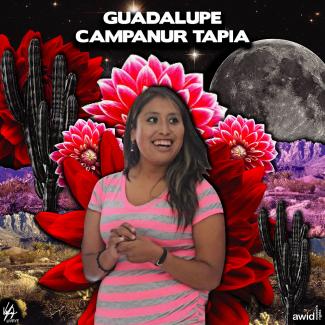
Guadalupe Campanur Tapia

Guadalupe était une activiste environnementale impliquée dans la lutte contre le crime à Cherán, au Mexique.

En 2011, Guadalupe a aidé à renverser le gouvernement local. Elle participait à des patrouilles de sécurité locale, notamment dans les forêts municipales et faisait partie des dirigeant-e-s autochtones de Cherán qui ont appelé les gens à défendre leurs forêts contre l’abattage implacable et illégal. Son travail pour les aînés, les enfants, les travailleurs-euses a fait d'elle une icône dans sa communauté.

Elle a été assassinée à Chilchota, au Mexique, à environ 30 kilomètres au nord de Cherán, sa ville natale.


Guadalupe Campanur Tapia, Mexico

5. Conduct interviews

Interviews produce in-depth information that you cannot easily obtain from surveys. While surveys focuses mainly on quantifiable data and closed questions, interviews allow for expert opinions from activists and donors, and open-ended questions which can provide context to survey data results.

In this section

General tips

1. Before conducting your interviews

Send the interviewees a concept note with your objectives for the interview and for your overall research, as well as a list of questions.

This allows them to prepare answers for more complicated questions and look up information that they may not have immediately on hand.

2. During the interviews

  • You can conduct interviews while your survey is running, in order to save time.
  • Try to keep your interviews as consistent as possible in order to facilitate systematic analysis of results. This means asking the same questions. Coding identical responses to each question will allow you to uncover hidden trends.
  • The interviews can also be used to flesh out some of the survey findings

Do not base your questions on assumptions about your interviewees’ knowledge.
Instead, first clarify what they know – this will reveal information as well.

  • DON’T: “Given the current funding trends in Switzerland, do you know of any opportunities for collaboration? This question assumes that the interviewee knows current funding trends and that their understanding of funding trends matches yours.
  • DO: First ask “What is your understanding of current funding trends in Switzerland?”, followed by “Do you know of any opportunities for collaboration?” This will reveal what their understanding is, giving you even more information than the first question.

Back to top


Specialized interviews

1. Donor interviews

Interviews with donors will allow you to build deeper relationships with them, which will be useful when you conduct post-research advocacy. They will also provide you with deeper insight into funders’ decision-making processes.

Suggested topics of focus for donor interviews:

  • What are their funding priorities? Why and how did they select those priorities? For example, why do they choose project-funding over core support or vice versa?
  • What are annual amounts allocated to the advancement of women’s human rights? This will strengthen overall reliability of data collected.
  • Have they noticed any funding trends, and what do they believe are the origins and politics behind these trends?
  • What is their theory of social change and how does that impact their relationships with women’s rights organizations?
View samples of donor interviews

2. Women’s rights organizations and activists interviews

Interviews with women’s rights organizations and activists will provide you with insight into their on-the-ground realities. Again, these interviews will allow you to build deeper relationships that can be incorporated into your advocacy, particularly to encourage collaboration between donors and activists.

Suggested topics of focus for women’s rights organizations and activist interviews:

  • Long-term funding priority trends noted by women’s organizations and their impact.
  • Successful examples of feminist and collaborative resource mobilization strategies that build strong and complementary movements.
  • “Making the case” for why it is important to support women’s organizations and organizing.
  • How different actors understand the social change process and their role in advancing/achieving gender equality and women’s rights.
View samples of women’s organizations and activists interviews

Back to top


Preliminary findings

Through the course of your WITM research, we recommend analyzing your preliminary findings. Presenting your preliminary findings opens up opportunities to conduct more interviews and get feedback on your research process and initial results. This feedback can be incorporated into your final research.

AWID conducts “WITM convenings” to share preliminary results of survey data and interviews. These gatherings allow participants (activists, women’s rights organizations, and donors) to debate and discuss the results, clarifying the context, creating more ownership amongst members of the movement, and providing more input for final research.

For example, the Resource Mobilization Hub for Indigenous Women’s Rights at the World Summit on Indigenous Philanthropy was used as a space to debut preliminary results.

See the presentation given at the RMH

Back to top


Previous step

4. Collect and analyze your data

Next step

6. Conduct desk research

Estimated time:

• 1.5 - 3 months

People needed:

• 1 or more research person(s)

Resources needed:

• List of donors and women’s rights organizations and activists to interview
• Prepared interview questions
• Concept Note (You can use the research framing you created in the “Frame your research” section)

Resources available:

AWID Sample Interview Questions: Donors
AWID Sample Interview Questions: Activists & Women’s Rights Organizations


Previous step

4. Collect and analyze your data

Next step

6. Conduct desk research

Ready to Go? Worksheet

Download the toolkit in PDF

Snippet FEA Audio A Caring Economy (ES)

Escucha esta historia aquí:

Snippet - WITM Who should - RU

КОМУ СТОИТ ПРОЙТИ ЭТОТ ОПРОС?

Опрос предназначен для групп, организаций и движений, работающих исключительно или главным образом по вопросам защиты прав женщин, ЛГБТКИ+, гендерной справедливости во всех контекстах, на всех уровнях и во всех регионах. Если одно из этих направлений является основным видом деятельности вашей группы, коллектива, сети или любого другого типа организации – независимо от того, зарегистрирована она или нет, недавно создана или существует уже давно, мы приглашаем вас принять участие в этом опросе.

Girl in a jacket

* На данном этапе мы не ожидаем ответов от частных лиц или женских и феминистских фондов.

Узнайте больше об опросе:
загляните в часто задаваемые вопросы

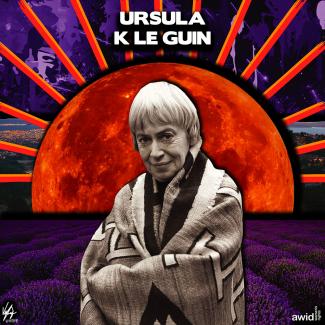
Ursula K Le Guin

Ursula was an American novelist who worked mainly in the genres of fantasy and science fiction.

She found fame with The Left Hand Of Darkness, which imagines a future society where people are ambisexual – they have no fixed sex. It explores the effects of gender and sex in society, and was one of the first major feminist science fiction books. Ursula was inspiring in her subversive and original writing, and also for the themes of feminism and freedom she held so dearly.

In a 1983 address at Mills College in California, she told graduates: “Why should a free woman with a college education either fight Macho-man or serve him? Why should she live her life on his terms? I hope you live without the need to dominate, and without the need to be dominated.”


Ursula K Le Guin, USA

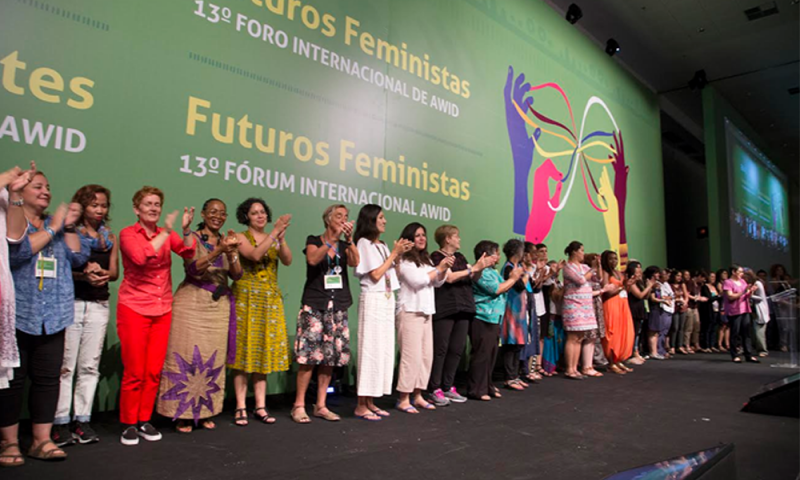
Gracias por participar en la creación de nuestros Futuros Feministas

¡Gracias por haber sido parte del Foro AWID 2016!

AWID agradece enormemente a todxs ustedes que han compartido con nosotrxs estos últimos cuatro días de aprendizaje, celebraciones, ideaciones, sueños y la construcción conjunta de nuestros futuros feministas en el Foro AWID 2016.

Nos sentimos muy inspiradxs, maravilladxs y llenxs de energía con todo el trabajo colectivo que hemos hecho para crear nuestros diversos futuros feministas.

Para más imagen, blogues y recursos:

Visite el sitio del Foro


Conéctate con #AWIDForum

Snippet FEA Travesti (FR)

TRAVESTI :

une identité de genre latino-américaine

Le terme travesti désigne une identité de genre latino-américaine sans équivalent dans d'autres langues, et exclusivement féminine. C'est une personne désignée de genre masculin à la naissance qui s'identifie comme une femme.

Elles doivent toujours être adressées avec le pronom “elle”. Travesti n'est pas seulement une identité de genre située en dehors de la binarité de genre, c'est aussi une identité culturelle enracinée dans les mouvements latino-américains.

Le terme était initialement péjoratif, mais a ensuite été réapproprié comme symbole de résistance et de dignité. Chaque travesti est trans parce qu'elle ne s'identifie pas au genre désigné à la naissance, mais toutes les travesti ne se considèrent pas comme femmes trans, car travesti est déjà une identité de genre en soi.

Référence: Berkins, Lohana. (2006). Travestis: una Identidad Política . Trabajo presentado en el Panel Sexualidades contemporáneas en las VIII Jornadas Nacionales de Historia de las Mujeres/ III Congreso Iberoamericano de Estudios de Género Diferencia Desigualdad. Construirnos en la diversidad, Villa Giardino, Córdoba, 25 al 28 de octubre de 2006.

Snippet - WITM To make - PT

Para dar ênfase à complexidade do financiamento de várias formas de organização feminista;

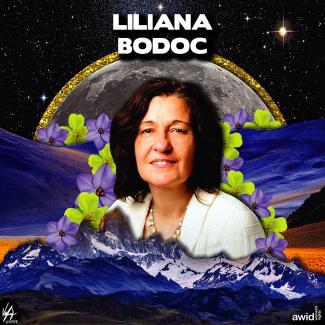
Liliana Bodoc

Liliana fue una maestra argentina, una tejedora y una escritora muy reconocida.

Su trilogía La saga de los confines recibió varios premios y es única en el género fantástico por su uso y reimaginación de la mitología de los pueblos indígenas de América del Sur.

El compromiso de Liliana con el feminismo se expresaba en las diversas, ricas y fuertes voces de mujeres en su escritura y especialmente en su extensa obra para lectorxs jóvenes. También tomó posición públicamente en favor del aborto, la justicia económica y la equidad de género.


Liliana Bodoc, Argentina

Les savoirs communautaires pour bâtir des futurs justes

Le contexte

Aujourd'hui, de nombreux systèmes de savoirs communautaires sont en danger.

Les changements qui surviennent à une vitesse effrénée sur le plan économique, politique et culturel détruisent les environnements, les pratiques et les moyens de subsistance. Diverses formes de connaissances sombrent dans l’oubli, sont marchandées et colonisées dans le cadre de la mondialisation massive, de la promesse de gains à court terme, ou encore contre des solutions de fortune.

Définition

Le Buen Vivir (le bien-vivre), un concept adapté à partir des connaissances des peuples autochtones andins, est décrit comme la réalisation collective d'une vie d'accomplissement fondée sur des relations harmonieuses et équilibrées entre les êtres humains et tous les êtres vivants, dans la réciprocité et la complémentarité. Cela implique de reconnaître que les êtres humains sont une partie intégrante de la nature, que nous dépendons de la nature et que nous sommes interdépendant-e-s entre nous.

La vision inhérente à la notion de Buen Vivir intègre la production et la reproduction comme processus indissociables de l'économie, de la production de richesse et des conditions de vie.

Perspective féministe

D’une perspective féministe, le Buen Vivir valorise les relations et les ressources mobilisées dans les cycles de production et de reproduction, favorisant l’équilibre (non seulement celui des marchés) afin de garantir la continuité et les changements, tant qu'ils sont compatibles avec la justice économique et la pérennité de la vie.

Certaines conceptions binaires liées au genre et à la complémentarité entre les hommes et les femmes ont été critiquées par les féministes puisqu’elles laissent peu de place à une discussion plus approfondie sur le patriarcat hétérocentrique et les relations de genre ‘non conformes’.

Cela dit, l'une des principales contributions de l’application du principe Buen Vivir aux cadres politiques, économiques et sociaux, consiste à ce que l'égalité ne représente plus le paradigme des droits individuels, ayant plutôt pour objet la transformation de l’ensemble de la société.


Pour en savoir plus sur cette proposition :

  • Buen Vivir: An introduction from a women’s rights perspective in Bolivia (Une perspective des droits des femmes sur le Buen Vivir en Bolivie : Une introduction, disponible en anglais). Dans son article, Martha Lanza conteste l'idée que le Buen Vivir est neutre en matière de genre et réclame le démantèlement des structures de pouvoir patriarcales qui persistent. Dans la même publication, Magdalena León analyse d’une perspective de genre la façon dont la cosmovision du Buen Vivir cherche à vaincre les idéaux d'expansion et de croissance permanentes, en plus de mettre en lumière les préjugés sexistes qui doivent être pris en compte.
  • Buen Vivir: Today’s Tomorrows (Les lendemains d’aujourd’hui) par Eduardo Gudynas (en anglais).
  • Indigenous Women's Visions of an Inclusive Feminism (Visions de femmes autochtones pour un féminisme inclusif), par Myrna Cunningham (en anglais). Un document qui met en évidence les contributions essentielles des femmes autochtones à la construction d'un mouvement féministe plus diversifié, inclusif et fort.

Snippet Intro The Feminist Realities Magazine (EN)

The Feminist Realities Magazine

Feminist Realities are embedded in the multiple ways that show us that there is a different way of living, thinking and doing - from the daily expressions of how we live and relate to each other, to alternative systems of governance and justice. Feminist Realities resist dominant power systems such as patriarchy, capitalism, and white supremacy. 

These are powerful propositions that orient us toward a vision of what is possible, and show how feminist organizing is blazing a path toward justice in movements and communities around the world. 

Download your full Magazine (PDF)

Explore the magazine

Snippet - WITM About the survey - PT

Sobre o inquérito

  • GLOBAL E DIVERSO: Reflete sobre as realidades de financiamento da organização feminista em escala global e separadas por regiões
  • CONTEXTUALIZADO: Dá enfâse às vozes, perspetivas e experiências vividas dos movimentos feministas com toda a sua riqueza, coragem e diversidade, nos seus respetivos contextos
  • CRIADO EM COLABORAÇÃO: Desenvolvido e testado em colaboração conjunta com membres da AWID e parceires do movimento
  • COMPLEMENTAR: Contribui para os testemunhos existentes e aprofunda os mesmos sobre o estado de financiamento para a organização feminista, de direitos das mulheres e de justiça de género por ativistas, financiadores feministas e aliados
  • MULTILINGUE: Disponível em árabe, inglês, francês, português, russo e espanhol.
  • CONFIDENCIAL: Damos prioridade à sua privacidade e ao seu anonimato. A AWID jamais divulgará informações sobre uma organização específica ou informações que permitam identificar uma organização através da respetiva localização ou características. A nossa política de privacidade detalhada está disponível aqui.
  • ACESSÍVEL: Acessível para pessoas com uma variedade diversificada de habilidades auditivas, de movimento, visuais e cognitivas, sendo que demora aproximadamente 30 minutos a ser realizado.
  • REPRODUZÍVEL: Pode ser reproduzido através dos movimentos nos seus respetivos contextos; ferramentas de inquérito e conjuntos de dados estarão disponíveis publicamente para abranger mais inquéritos e advocacia coletiva.

Anna Campbell (şehid Hêlîn Qerecox)

Anna a grandi à Lewes, dans le Sussex (Royaume-Uni). Après avoir décidé de ne pas poursuivre sa licence d’anglais à l'Université de Sheffield, elle a déménagé à Bristol et est devenue plombière.

Elle a passé une grande partie de son temps à défendre les personnes marginalisées et défavorisées, à assister à des rassemblements antifascistes et à offrir son soutien aux femmes de la Dale Farm lorsqu'elles furent menacées d'expulsion. Végétalienne et amie des animaux, elle a participé à des missions de sabotage de chasses et son nom est honoré sur le monument commémoratif « Arbre de vie » de l’organisation PETA. Anna s'est rendue à Rojava en mai 2017 pour lutter en faveur du renforcement du pouvoir des femmes, de la pleine représentation de toutes les ethnies et de la protection de l'environnement.

Anna est décédée le 15 mars 2018, après avoir été atteinte par une frappe aérienne turque dans la ville d'Afrin, dans le nord de la Syrie. Anna se battait auprès des forces de protection des femmes (YPJ) quand elle a été tuée.


Anna Campbell (şehid Hêlîn Qerecox), UK

Protection of the Family - Opposition Views

New conservative alliance:

Conservative organizing and policy

State supporters