Confronting Extractivism & Corporate Power

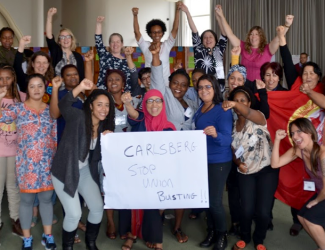
Women human rights defenders (WHRDs) worldwide defend their lands, livelihoods and communities from extractive industries and corporate power. They stand against powerful economic and political interests driving land theft, displacement of communities, loss of livelihoods, and environmental degradation.


Why resist extractive industries?

Extractivism is an economic and political model of development that commodifies nature and prioritizes profit over human rights and the environment. Rooted in colonial history, it reinforces social and economic inequalities locally and globally. Often, Black, rural and Indigenous women are the most affected by extractivism, and are largely excluded from decision-making. Defying these patriarchal and neo-colonial forces, women rise in defense of rights, lands, people and nature.

Critical risks and gender-specific violence

WHRDs confronting extractive industries experience a range of risks, threats and violations, including criminalization, stigmatization, violence and intimidation.  Their stories reveal a strong aspect of gendered and sexualized violence. Perpetrators include state and local authorities, corporations, police, military, paramilitary and private security forces, and at times their own communities.

Acting together

AWID and the Women Human Rights Defenders International Coalition (WHRD-IC) are pleased to announce “Women Human Rights Defenders Confronting Extractivism and Corporate Power”; a cross-regional research project documenting the lived experiences of WHRDs from Asia, Africa and Latin America.

We encourage activists, members of social movements, organized civil society, donors and policy makers to read and use these products for advocacy, education and inspiration.

Share your experience and questions!

Tell us how you are using the resources on WHRDs Confronting extractivism and corporate power.

◾️ How can these resources support your activism and advocacy?

◾️ What additional information or knowledge do you need to make the best use of these resources?

Share your feedback


Thank you!

AWID acknowledges with gratitude the invaluable input of every Woman Human Rights Defender who participated in this project. This project was made possible thanks to your willingness to generously and openly share your experiences and learnings. Your courage, creativity and resilience is an inspiration for us all. Thank you!

Related Content

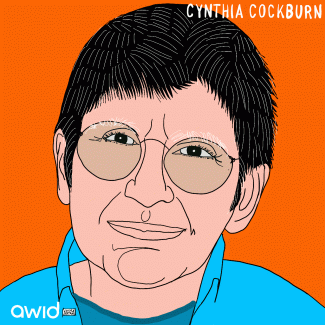
Cynthia Cockburn

Cynthia Cockburn was a feminist sociologist, writer, academic, photographer and peace activist.

She explored the gendered aspects of violence and conflict and made significant contributions to the peace movement through her exploration of the themes of masculinity and violence as well as her local and international activism.

Cynthia brought a feminist power analysis to militarisation and war, and was among the academics whose writings and analysis clearly demonstrated how gender-based violence played a key part in perpetuating war. Working closely with peace activists in countries experiencing conflict, her findings covered diverse contexts including Northern Ireland, Bosnia-Herzegovina, Israel/Palestine, South Korea, Japan, Spain and the UK. She helped bring in her research and academic writings, an understanding that violence was experienced as a continuum of time and scale and perceived very differently when seen from a gendered lens.

In her words, “Gender helps us to see the continuity, the connection between instances of violence.” 

Cynthia bridged her research with the activism she did locally and internationally with movements for demilitarisation, disarmament and peace. She helped start the Greenham Common women’s peace camp, which advocated for universal nuclear disarmament in Britain and was part of establishing the London chapter of Women in Black.

Over the decades, Cynthia organized and participated in local weekly vigils and the political choir Raised Voices, singing in the choir, and writing several of the lyrics to the songs that have made up its repertoire. She was also active in the Women’s International League for Peace and Freedom (WILPF), the European Forum of Socialist Feminists as well as in Women Against Fundamentalism.

“Cynthia shed feminist light, wove together feminist communities, sang songs of peace, listened, listened, listened, watched the birds – and stopped traffic. I’ll be forever and gratefully in her debt, the other ‘Cynthia’” – Cynthia Enloe

Cynthia was born in July 1934 and passed away in September 2019 at the age of 85.
Publications - Homepage - es

Publicaciones

Enciende tu fuego feminista leyendo nuestras investigaciones y publicaciones varias sobre financiamiento, defensoras de derechos humanos, construcción de movimientos, fundamentalismos, justicia económica, seguimiento y evaluación feminista y más

Leer más

Main image
banners-10.png
Body

Upasana Agarwal

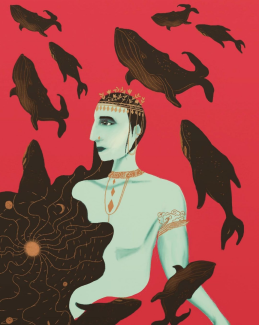
Forgotten Song
“Forgotten Song” [«Canción Olvidada»]
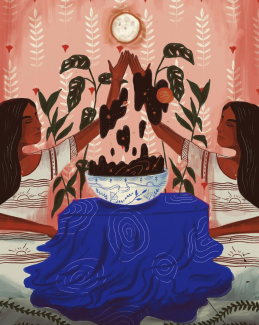
Ode to the Moon
“Ode to the Moon” [Oda a la Luna»]
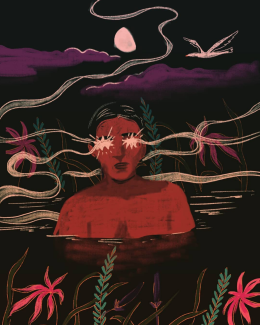
Vapour and Fire
“Vapour and Fire” [«Vapor y Fuego»]

Sobre Upasana Agarwal

Upasana Agarwal
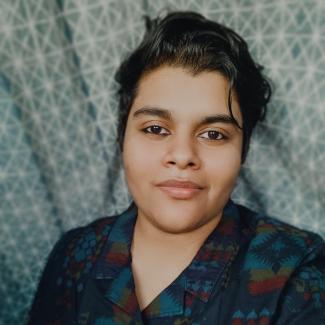
Upasana es unx ilustradorx y artista no binarie de Calcuta, India. Su obra explora narrativas identitarias y personales, que empean restos o evidencias visuales de los contextos con los que trabaja. Le atraen especialmente los diseños en patrones que, para ellx, comunican verdades complejas sobre el pasado, el presente y el futuro. Cuando Upasana no está ilustrando, organiza y dirige un centro de arte comunitario queer y trans de la ciudad.

Snippet FEA Audio Story 4 (FR)

Écoutez cette histoire ici :

Snippet - Home page promo WITM - EN

"Where is the money for feminist organizing?"

Building on our 20-year history of mobilizing more and better funding for feminist-led social change, AWID invites you to complete the new iteration of our flagship survey, WITM.

START THE SURVEY Learn more

Hevrin Khalaf

Hevrin Khalaf fue una destacada líder política siria-kurda de la región autónoma de Rojava, donde las mujeres kurdas están arriesgando sus vidas para resistir la ofensiva turca y construir un sistema feminista.

Hevrin fue Secretaria General del Future Syria Party [Partido de la Futura Siria] (FSP, por sus siglas en inglés), un grupo que tenía como objetivo la construcción de puentes, la reconciliación entre diferentes grupos étnicos y el trabajo hacia una "Siria democrática, pluralista y descentralizada".

Hevrin fue un símbolo de este esfuerzo de reconciliación. También trabajó para promover la igualdad entre mujeres y hombres y fue una representante para periodistas, trabajadorxs de ayuda humanitaria y diplomáticxs que visitaban la región.

Hevrin era también una ingeniera civil de Derik, y fue una de las fundadoras de Foundation for Science and Free Though [(Fundación para la Ciencia y el Libre Pensamiento] en 2012.

El 12 de octubre de 2019 fue torturada y asesinada por la milicia Ahrar al-Sharqiya, sustentada por Turquía, durante una operación militar contra las Fuerzas Democráticas Sirias en Rojava.

"El asesinato de Khalaf es un punto de inflexión en la historia moderna de Siria. Demuestra una vez más el viejo proverbio kurdo "no hay amigxs sino montañas". Siempre seré amigo[NC1]  de Khalaf y su visión de un mundo mejor." - Ahed Al Hendi

FRMag - Anatomy of a survivor's story

Anatomie de l'histoire d’une survivante

par Maryum Saifee 

Lorsqu’on effectue une recherche en ligne sur les « Mutilations génitales féminines » ou « MGF », un schéma en quatre parties sur l’anatomie des femmes apparaît à côté d’une page Wikipédia dédiée.  (...)

Lire

Illustration : « Rêves », par Neesa Sunar >

Comprendre le contexte des menaces antidroits

Chapitre 2

Bien plus de la moitié de la population mondiale est aujourd’hui dirigée par l’extrême droite. C’est sur cette toile de fond que défenseur·e·s des droits humains et féministes luttent pour « tenir bon », protéger le multilatéralisme et le système international des droits humains, alors que leurs engagements les exposent à de violentes répressions. Ces institutions sont cependant de plus en plus soumises aux intérêts du secteur privé. Les grandes entreprises, surtout les sociétés transnationales, siègent à la table des négociations et occupent des fonctions de leadership dans plusieurs institutions multilatérales, l’ONU notamment. Le lien entre ultranationalisme, restriction de l’espace civique et emprise des entreprises a un impact considérable sur la réalisation ou non des droits humains pour tout le monde.

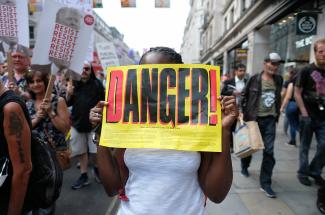
Protester holding a flyer that reads "Danger - Trump and the Far Right."
© Alisdare Hickson / Flickr
Danger - Trump and the Far Right.

Sommaire

  • Nationalisme et ultranationalisme
  • Emprise des entreprises : le pouvoir débridé des entreprises met nos droits en danger
  • Répression et restriction des espaces civiques pour les activistes féministes et les défenseur·e·s des droits humains des femmes et des personnes LGBTIQ+
  • Histoire du mouvement de la résistance. L’Article 16 de la CEDAW : vers une réforme des codes de la famille discriminatoires dans les contextes musulmans
     

Lire le chapitre complet >

Snippet - Podcast Intro (EN)

We are thrilled to announce the launch of AWID’s new podcast THAT FEMINIST FIRE. Our narrative series unravels over 40 years of feminist movements—and reimagines a way forward.

In our pilot season, you’ll hear five compelling stories that are part of a constellation of feminist activism today. Hosted by our very own Gopika Bashi, Deputy Director of Programmes at AWID, each episode explores unique but interconnected feminist realities that are achieving greater gender justice and human rights.

Produced by our Webby-winning podcast partner Hueman Group Media, you can subscribe to THAT FEMINIST FIRE and listen to our first episode here.

Find us on Apple Podcasts, Spotify, or wherever you get your podcasts. Share with your network! Help us spread stories that ignite our feminist fire and move us to action.

Subscribe here

What Our Members Say - FR

Ce que disent nos membres

Diana Isabel Hernández Juárez

Diana Isabel Hernández Juárez était une enseignante, défenseure des droits humains et activiste pour l’environnement et les communautés guatémaltèque. Elle coordonnait le programme environnemental de la paroisse de Nuestra Señora de Guadalupe, sur la côte sud du Guatemala. 

Diana a dévoué sa vie à co-créer des actions de sensibilisation à l’environnement, en étroite collaboration avec les communautés locales, dans le but de résoudre les problèmes environnementaux et protéger les ressources naturelles. Elle a été à l’initiative de projets de pépinières forestières, de fermes municipales, de jardins familiaux et de campagnes de nettoyage. Active dans les programmes de reboisement, elle s’est efforçée de récupérer des espèces locales et de remédier aux pénuries d’eau dans plus de 32 communautés rurales.

Le 7 septembre 2019, Diana a été assassinée par balle par deux hommes armés inconnus alors qu’elle participait à une procession dans sa localité. Diana n’avait que 35 ans au moment de son décès.

FRMag - Our neighbourhood, our network

Our neighbourhood, our network, our strength

by Marta Plaza Fernández

The feminist reality that I want to share is about weaving networks in which we uphold one another. (...)

Read

artwork: “Entretejidas” [Interwoven women] by Surmercé >

The Crear, Résister, Transform Story by Coumba Toure

A magical experience of feminist story telling led by pan-African feminist Coumba Toure, performing in the age old tradition of West African griots.

And we gathered again 
We gathered our stories our strength 
our songs
our tears 
our rage 
our dreams 
our success
our failures
And we pull them all together 
In one big bowl to share 
for a moon of thoughts 
And we stay in touch 
We shake each others minds 
we caress each other souls
While our hands still are tied 
And our kisses and hugs are banned 
Yet we grow stronger by the hour 
Weaving together our voices
Crossing the sound barriers 
as we speak in tongues 

We are getting louder and louder 
We know about differences from others 
and from each other so we are stitching our beauties into patchwork or thoughts
From our deepest learnings from our powers 
Sometimes we are surrounded by terror 
by confusions by dishonesty
But we wash out in the Ocean of love 
We are weavers of dreams 
To clothes or new world 
Thread after thread
As small as we are
Like little ants building our movement
Llike little drops building our rivers
 We take steps forward and steps backward 
Dancing our way back to sanity 
Sustain to the rhythm of our hearts keep 
Beating please don't not stop
And we are here transmitter of forgotten generosity 
drop after drop growing like the ocean 
growing like the river flowing from our souls .
showing our strength  to be  the  water 
that will clean this world
and we are gathering again can you feel us 
I would lie if I say I said I am 
Ok not to see you I do miss my people 
I miss your touch and
You unfiltered and unrecorded voices 
I miss our whispers and our screams 
Our cries of the aborted revolution 
We only want to give birth to new worlds 
 So fight to erase the borders between us 


And we gathered again 
We gathered our stories our strength 
our songs
our tears 
our rage 
our dreams 
our success
our failures
And we pull them all together In one big bowl to share 
For a moon of thoughts 
And we stay in touch 
We shake each others minds 
we caress each other souls
While our hands still are tied 
And our kisses and hugs are banned 
Yet we grow stronger by the hour 
Weaving together our voices
Crossing the sound barriers 
as we speak in tongues 
We are getting louder and louder 
We know about differences from others 
and from each other so we are stitching our beauties into patchwork or thoughts
From our deepest learnings from our powers Sometimes we are surrounded by terror by Confusions by dishonesty
But we watch out in the Ocean of love 
We are weavers of dreams 
To clothes or new world 
Thread after thread 
As small as we are like little ants building our movements
 like little drops building our rivers We take steps forward and steps backward 
dancing our way back to sanity 
Sustain to the rhythm of our hearts
keep beating please don't not stop
And we are here transmitter of forgotten generosity 
Drop after drop growing like the ocean 
growing like the river flowing from our souls 
showing our strength to be  the  water 
that will clean this world  
and we are gathering again can you feel us 
I would lie if I I said I am Ok
not to see you
I do miss my people
I miss your touch and
You unfiltered and unrecorded voices  
I miss  our  whispers  and  our screams 
Our cries over the aborted revolutions 
We only want to give birth to new worlds 
So fight to erase the borders between us 
Please don’’t stop

Snippet - GII Download (FR)

Snippet - CSW69 spaces to watch out for - EN

CSW69 spaces to watch out for

Learn more about upcoming CSW69 events that AWID is co-organizing

Fadila M.

Fadila M. was a Soulaliyate tribal activist from Azrou, the Ifrane region of Morocco. She fought against a specific form of land discrimination directed against tribal women.

As part of the Soulaliyate Women’s Land-Use Rights Movement, she worked towards overhauling the framework legislation relating to the management of community property through the 2019 adoption of three projects of laws guaranteeing the equality of women and men.

According to the customary laws in force, women had no right to benefit from the land, especially those who were single, widowed or divorced. The rights to collective land in Morocco were transmitted traditionally between male members of a family of over 16 years of age. Since 2007, Fadila M. had been part of the women’s movement, the first grassroots nationwide mobilization for land rights. Some of the achievements included that in 2012 for the first time Soulaliyate women were able to register on the lists of beneficiaries and to benefit from compensation relating to land cession. The movement also managed to get the 1919 dahir (Moroccan King's decree) amended to guarantee women the right to equality.

Fadila M. died on 27 September 2018. The circumstances of her death are unclear. She was part of a protest march connected to the issue of collective land and while authorities reported her death as being accidental, and her having a cardiac arrest on the way to the hospital, the local section of the Moroccan Association of Human Rights (AMDH) pointed out that Fadila was suffocated by a member of the police force using a Moroccan flag. Her family requested investigation but the results of the autopsy were not known.

Find out more about the Soulaliyate Women’s Land-Use Rights Movement


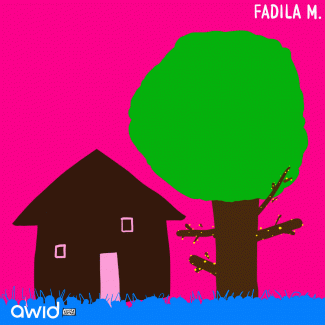
Please note: As there was no photograph/image of Fadila M. available to us, the artwork (instead of a portrait) aims to represent what she fought and worked for; land and rights to live and have access to that land and what grows on it.