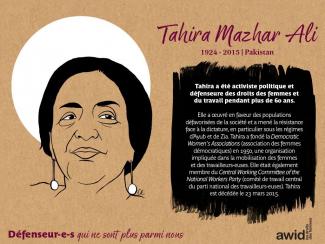
Tahira Mazhar Ali
Over the past few years, a troubling new trend at the international human rights level is being observed, where discourses on ‘protecting the family’ are being employed to defend violations committed against family members, to bolster and justify impunity, and to restrict equal rights within and to family life.
The campaign to "Protect the Family" is driven by ultra-conservative efforts to impose "traditional" and patriarchal interpretations of the family, and to move rights out of the hands of family members and into the institution of ‘the family’.
Since 2014, a group of states have been operating as a bloc in human rights spaces under the name “Group of Friends of the Family”, and resolutions on “Protection of the Family” have been successfully passed every year since 2014.
This agenda has spread beyond the Human Rights Council. We have seen regressive language on “the family” being introduced at the Commission on the Status of Women, and attempts made to introduce it in negotiations on the Sustainable Development Goals.
AWID works with partners and allies to jointly resist “Protection of the Family” and other regressive agendas, and to uphold the universality of human rights.
In response to the increased influence of regressive actors in human rights spaces, AWID joined allies to form the Observatory on the Universality of Rights (OURs). OURs is a collaborative project that monitors, analyzes, and shares information on anti-rights initiatives like “Protection of the Family”.
Rights at Risk, the first OURs report, charts a map of the actors making up the global anti-rights lobby, identifies their key discourses and strategies, and the effect they are having on our human rights.
The report outlines “Protection of the Family” as an agenda that has fostered collaboration across a broad range of regressive actors at the UN. It describes it as: “a strategic framework that houses “multiple patriarchal and anti-rights positions, where the framework, in turn, aims to justify and institutionalize these positions.”
Meet Clemencia Carabalí Rodallega, an extraordinary Afro-Colombian feminist.
She has worked relentlessly for three decades towards the safeguarding of human rights, women’s rights and peace-building in conflict areas on the Pacific Coast of Colombia.
Clemencia has made significant contributions to the fight for truth, reparations and justice for the victims of Colombia’s civil war. She received the National Award for the Defense of Human Rights in 2019, and also participated in the campaign of newly elected Afro-Colombian and long-time friend, vice-president Francia Marquez.
Although Clemencia has faced and continues to face many hardships, including threats and assassination attempts, she continues to fight for the rights of Afro-Colombian women and communities across the country.
La Conferencia de Monterrey sobre la Financiación para el Desarrollo marcó el comienzo de las conversaciones acerca de una agenda de Financiación para el Desarrollo.
Para saber más sobre los seis temas centrales de Monterrey los mecanismos de seguimiento a esta conferencia, consulta Género y financiación para el desarrollo, de Maria Floro, Nilufer Çagatay, John Willoughby y Korkut Ertürk (INSTRAW, 2004).
1 |
Provide AWID members, movement partners and funders with an updated, powerful, evidence-based, and action-oriented analysis of the resourcing realities of feminist movements and current state of the feminist funding ecosystem. |
2 |
Identify and demonstrate opportunities to shift more and better funding for feminist organizing, expose false solutions and disrupt trends that make funding miss and/or move against gender justice and intersectional feminist agendas. |
3 |
Articulate feminist visions, proposals and agendas for resourcing justice. |
 |
 |
 |
 |
 |
|
|
|
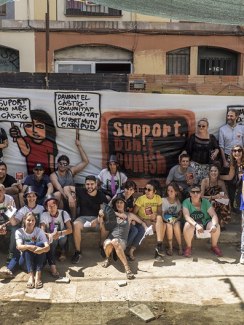
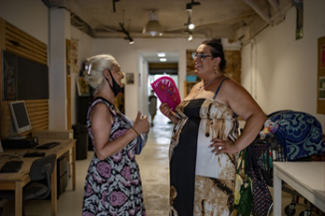
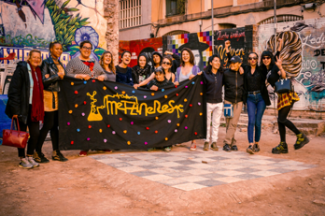
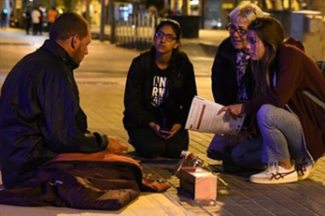
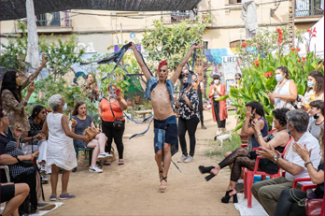
Activistas de Metzineres en acción |

La Conférence des Nations Unies de 2009 sur la crise financière et économique mondiale et son incidence sur le développement
There are many reasons why your response to the WITM survey matters. The survey offers the opportunity to share your lived experience of mobilizing funding to support your organizing; claim your power as an expert on how money moves and who it reaches; and contribute to collective and consistent advocacy to funders moving more and better funding. Over the last two decades, AWID’s WITM research has proven to be a key resource for activists and funders. We wholeheartedly invite you to join us in its third iteration to highlight the actual state of resourcing, challenge false solutions, and point out how funding must change for movements to thrive and meet the complex challenges of our times.
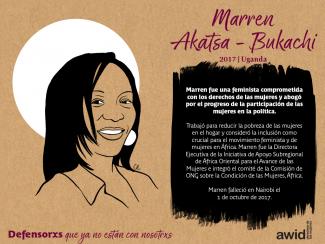
Vous pouvez suivre le travail de ces collectifs sur les réseaux sociaux et sites internet suivant:

Release of the Zero-Draft Outcome Document, March 2015
No. Valoramos muchísimo su trabajo, pero no estamos buscando respuestas de fondos de mujeres/feministas por el momento. Alentamos a compartir la encuesta con sus socios beneficiarios y con sus redes feministas.
.
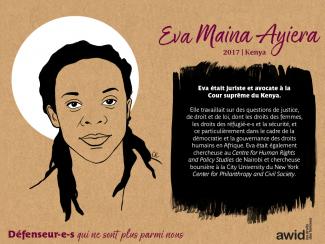
Une communauté en ligne pour et par les jeunes féministes qui militent pour les droits humains des femmes, l'égalité de genre et la justice sociale dans le monde entier
Finance des projets initiés par de jeunes féministes. Vise à renforcer la capacité des organisations de jeunes féministes à mobiliser des ressources pour leurs actions et à encourager des bailleur-euse-s de fonds et d’autres allié-e-s à financer l’activisme des jeunes féministes.
Cette plateforme sera l’espace de référence pour accéder à des informations et à des ressources concernant la sauvegarde de l'universalité des droits humains dans les espaces internationaux et régionaux.
Visitez le site (en anglais)
Un site pour en savoir plus sur les mesures d’urgence entreprises pour protéger les défenseuses des droits humains et pour trouver des outils et des ressources au soutien de leur travail et de leur bien-être.
Une initiative régionale créée pour prévenir, répondre, documenter et rendre publics tous les cas de violence contre les défenseuses des droits humains dans la région mésoaméricaine.
Visitez le site (en anglais et en espagnol)
Un réseau qui réalise un travail de plaidoyer et propose des ressources pour protéger et soutenir les défenseuses des droits humains dans le monde entier.
Visitez le site (en anglais)
Une coalition d’organisations féministes, de droits des femmes, de développement, de justice sociale et d’organisations de terrain qui conteste le programme mondial de développement et plaide pour qu’il soit recadré.
Visitez le site (en anglais)
Le rôle du groupe consiste à assurer la pleine participation des groupes de femmes non gouvernementaux aux processus politiques de l'ONU sur le développement durable, le programme de l’après-2015 et les questions environnementales.
Visitez le site (en anglais)
Une alliance d’organisations et de réseaux de femmes qui font un travail de plaidoyer en faveur de l'égalité de genre, de l'autonomisation des femmes et des droits humains dans le cadre des processus des Nations unies relatifs à la composante Financement du développement (FdD).
Visitez le site (en anglais)

El proceso de la Financiación para el Desarrollo (FpD) de Naciones Unidas (ONU) se propone abordar distintas formas de financiación y cooperación para el desarrollo. Según lo acordado en el Consenso de Monterrey, se centra en seis áreas prioritarias: