Flickr/Leonardo Veras (CC BY 2.0)

Protection of the Family

The Issue

Over the past few years, a troubling new trend at the international human rights level is being observed, where discourses on ‘protecting the family’ are being employed to defend violations committed against family members, to bolster and justify impunity, and to restrict equal rights within and to family life.

The campaign to "Protect the Family" is driven by ultra-conservative efforts to impose "traditional" and patriarchal interpretations of the family, and to move rights out of the hands of family members and into the institution of ‘the family’.

“Protection of the Family” efforts stem from:

  • rising traditionalism,
  • rising cultural, social and religious conservatism and
  • sentiment hostile to women’s human rights, sexual rights, child rights and the rights of persons with non-normative gender identities and sexual orientations.

Since 2014, a group of states have been operating as a bloc in human rights spaces under the name “Group of Friends of the Family”, and resolutions on “Protection of the Family” have been successfully passed every year since 2014.

This agenda has spread beyond the Human Rights Council. We have seen regressive language on “the family” being introduced at the Commission on the Status of Women, and attempts made to introduce it in negotiations on the Sustainable Development Goals.


Our Approach

AWID works with partners and allies to jointly resist “Protection of the Family” and other regressive agendas, and to uphold the universality of human rights.

In response to the increased influence of regressive actors in human rights spaces, AWID joined allies to form the Observatory on the Universality of Rights (OURs).  OURs is a collaborative project that monitors, analyzes, and shares information on anti-rights initiatives like  “Protection of the Family”.

Rights at Risk, the first OURs report, charts a map of the actors making up the global anti-rights lobby, identifies their key discourses and strategies, and the effect they are having on our human rights.   

The report outlines “Protection of the Family” as an agenda that has fostered collaboration across a broad range of regressive actors at the UN.  It describes it as: “a strategic framework that houses “multiple patriarchal and anti-rights positions, where the framework, in turn, aims to justify and institutionalize these positions.”
 

Related Content

Snippet FEA Get Involved 1 (EN)

GET INVOLVED!

Follow the work of these organizations on their social media accounts and websites:

Snippet - WITM Survey will remain open - ES

¡Ve ahora el seminario web!

El 11 de julio de 2024, tuvimos una conversación increíble con grandes feministas sobre el estado del ecosistema de financiación y el poder de la investigación "¿Dónde está el dinero?".

Le agradecemos de manera especial a Cindy Clark (Thousand Currents), Sachini Perera (RESURJ), Vanessa Thomas (Black Feminist Fund), Lisa Mossberg (SIDA) y Althea Anderson (Hewlett Foundation).

Recuerda: ¡la encuesta permanecerá abierta hasta el 31 de agosto de 2024!

Ver la grabación

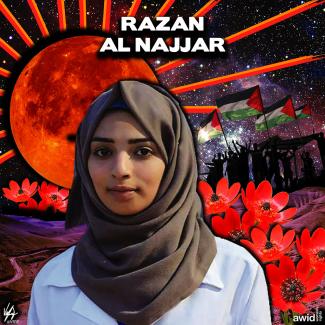
Razan Al-Najar

Razan était une infirmière palestinienne bénévole âgée de 21 ans.

Elle a été tuée par balle à l'est de la ville de Khan Younis, au sud de Gaza, alors qu'elle courait vers une clôture de la frontière fortifiée dans le but de porter secours à une victime.

Dans son tout dernier post sur Facebook, Razan avait déclaré : « J’y retourne et ne reculerai pas », ajoutant: « Frappez-moi de vos balles. Je n'ai pas peur ».


Razan Al-Najjar, Palestine

2009: The UN holds Conference on the impact of the economic crisis

2009 UN Conference on the World Financial and Economic Crisis and its Impacts on Development

  • The 2009 conference was an outcome of the 2008 Doha conference. The Doha Declaration had mandated that the United Nations hold a conference, to be organized by the President of the General Assembly, on the world financial and economic crisis and its impact on development.
  • During the conference women’s groups, through the WWG, highlighted the impact of the global financial crisis on vulnerable groups. In their statement to the members, the WWG proposed necessary actions to be taken by member states to redress the effects of the crisis to women. They stated that other social groups affected by the crisis are key to a response that is harmonized with international standards and commitments to gender equality, women’s rights and human rights and empowerment. 

Snippet FEA EoS The Powerful (EN)

Illustration of a pink human in white underwear doing a power pose

The Powerful
Self-protection and strengthening

Snippet - WITM RESOURCES - EN

Resources

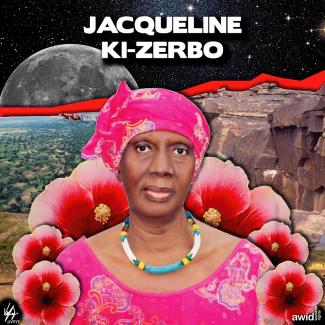
Jacqueline Coulibaly Ki-Zerbo

Jacqueline was a pioneering Malian/Burkinabe feminist, nationalist and educator.

She taught English in Senegal, before being recruited in 1961 as an English teacher at the Lycée Philippe Zinda Kaboré in Ouagadougou, Burkina Faso. Through her activism, she was involved in the popular uprising of January 3, 1966. Between 1961 and 1966, Jacqueline was also responsible for the trade union press, Voices of the Teachers. She was appointed as the head of the Normal Course for Young Girls (now known as Nelson Mandela High School) until 1974, and dedicated herself to girls’ education and advancing women’s rights.

In 1984 she was awarded the Paul G. Hoffmann Award for outstanding work in national and international development.


Jacqueline Coulibaly Ki-Zerbo, Mali/ Burkina Faso

Enero 2015: 1a sesión para redactar el documento final de la 3a Conferencia sobre FpD

Primera sesión para redactar el Documento Final de la tercera Conferencia Internacional sobre la Financiación para el Desarrollo

  • En enero de 2015, en la sede de la ONU en Nueva York comenzó una serie de sesiones para redactar el Documento Final.
  • Antes de la primera sesión, los facilitadores del proceso preparatorio de la Conferencia de Adís Abeba presentaron los “Elementos” para el llamado “Borrador Cero” del documento, que constituyeron la base para las negociaciones entre gobiernos en torno al Documento Final.
  • En esas sesiones, las organizaciones por los derechos de las mujeres subrayaron la necesidad de que, en los procesos post-2015, la FpD y los medios para su implementación se traten por separado, ya que la FpD brinda a los Estados una oportunidad única de ocuparse de las causas estructurales de la desigualdad.

Our Companion Sites

The Young Feminist Wire

An online community for and by young feminists working on women’s human rights, gender equality and social justice around the world.

Visit the site

The Observatory on the Universality of Rights (OURs)

The platform is the go-to place for information and resources on safeguarding the universality of rights in international and regional human rights spaces.

Visit the site

The Young Feminist Fund-FRIDA

Provides funding for young feminist-led initiatives. It aims to strengthen the capacity of young feminist organizations to leverage resources for their work and to increase donors’ and allies’ commitments to resourcing young feminist activism.

Visit the site

Online Directory of Urgent Responses for WHRDs

A go-to site to learn about the urgent responses undertaken to protect women human rights defenders and to find tools and resources to support the work and wellness of WHRDs.

Visit the site

IM-Defensoras (Mesoamerican Initiative for Women Human Rights Defenders)

A regional initiative created to prevent, respond, document and make public all cases of violence against women human rights defenders in the Mesoamerican region.

Visit the site

The WHRD International Coalition

The WHRD IC is a resource and advocacy network for the protection and support of women human rights defenders worldwide.

Visit the site

Post-2015 Women´s Coalition

A Coalition of feminist, women´s rights, women´s development, grassroots and social justice organisations working to challenge and reframe teh global development agenda. 

Visit the site

Women´s Major Group on Development

The role of the Women’s Major Group is to assure effective public participation of women’s non-governmental groups in the UN policy processes on Sustainable Development, Post2015 and Environmental matters. 

Visit the site

Women Working Group on Financing for Development

An alliance of women’s organizations and networks to advocate for the advancement of gender equality, women’s empowerment and human rights in the Financing for Development (FfD) related UN processes.

Visit the site

Snippet FEA Land and Agroecology (ES)

AGROECOLOGÍA Y

SOBERANÍA ALIMENTARIA

Mujeres Rurales Cuidando la Naturaleza y las Comunidades

Como activista, no trabajo con ninguna agrupación, organización o movimiento en este momento, ¿aun así debería completar la encuesta?

No. Valoramos tu trabajo, pero no estamos buscando respuestas de personas a título individual por el momento.

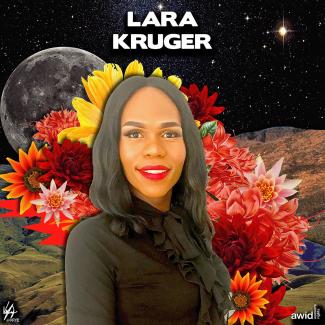
Lara Kruger

Lara fue una muy conocida y querida DJ de radio en la FM Motsweding, en Sudáfrica.

Fue una de las primeras conductoras abiertamente transgénero en una estación de radio comercial. Trabajó mucho para echar luz sobre los temas LGTBI.

El activismo de Lara comenzó a temprana edad, cuando defendía vivamente su derecho a vestirse y comportarse de una forma que le resultara cómoda y lo hacía frente a integrantes de su comunidad que todavía no entendían qué significaba ser transgénero.


Lara Kruger, South Africa

Juillet 2015

Forum des femmes sur le financement de l’égalité des genres

  • Le Forum a eu lieu le 10 juillet 2015, à Addis-Abeba. Il a rassemblait des féministes, des femmes venant de la base, des défenseuses de l’égalité des genres, des universitaires et des représentant-e-s des organisations/réseaux de défense des droits des femmes. Un certain nombre de représentant-e-s de l’ONU et d’autres responsables politiques ont été invité-e-s à apporter leur contribution.
  • Les objectifs du Forum des femmes sont les suivants : échanger des informations sur l’état d’avancement des dernières négociations relatives au FdD, analyser conjointement le panorama et le suivi du FdD, adopter une position commune concernant la défense des droits des femmes et, enfin, élaborer des stratégies visant à permettre aux organisations de femmes de contribuer de manière significative et considérable à la Conférence d’Addis Abeba sur le FdD, et ce dans une perspective féministe.
  • Le Forum des femmes est organisé par le WWG on FfD, en collaboration avec FEMNET, le Fonds de développement pour la femme africaine (AWDF) et la Post-2015 Women's Coalition. Il bénéficie également du soutien de l’ONU Femmes.

Forum des OSC sur le FdD

  • Le Forum des OSC sur le FdD a eu lieu à Addis-Abeba les 11 et 12 juillet 2015. Ses objectifs sont les suivants : informer les OSC participantes de l’état d’avancement des processus officiels et coordonner la participation de la société civile pendant la troisième Conférence sur le FdD ; élaborer une Déclaration collective des OSC et les messages des OSC à destination des participant-e-s aux tables rondes de la Conférence sur le FdD, mettre en place des manifestations parallèles organisées par le groupe des OSC sur le FdD et tout autre événement qui pourrait se présenter ;  enfin, planifier et organiser les futurs domaines d’engagement des OSC dans le secteur du financement du développement, au-delà de la troisième Conférence sur le FdD.
  • Pour plus d’informations, vous pouvez consulter le site internet du Groupe des OSC sur le FdD (en anglais) ou prendre contact avec le Groupe de coordination des OSC pour Addis-Abeba (addiscoordinatinggroup@gmail.com).

La troisième Conférence internationale des Nations Unies sur le financement du développement

  • La troisième Conférence internationale des Nations Unies sur le financement du développement a eu lieu à Addis-Abeba, en Éthiopie, du 13 au 16 juillet 2015. Ses objectifs principaux étaient les suivants : évaluer les progrès accomplis dans la mise en œuvre du Consensus de Monterrey (2002) et de la Déclaration de Doha (2008) ; traiter des problèmes nouveaux et de ceux qu’il faudra anticiper, y compris dans le contexte de récentes initiatives multilatérales visant à encourager la coopération internationale pour le développement et en tenant compte des éléments suivants : l’évolution actuelle du cadre de la coopération pour le développement, les interrelations entre les différentes sources de financement du développement, les synergies existantes entre les différents objectifs de financement propres aux trois dimensions du développement durable (économique, sociale et environnementale) et la nécessité de soutenir le programme de développement des Nations Unies au-delà de 2015, et, enfin, la redynamisation et le renforcement du processus de suivi relatif au financement du développement.
  • Le Programme d’action d’Addis-Abeba a été adopté le 15 juillet 2015 par les chefs d’États et de gouvernements ainsi que les hauts-représentants de l’ONU.
  • Cependant, les pays en développement, les OSC et plus particulièrement les organisations de femmes, estiment que le Programme d’action d’Addis-Abeba n’a pas atteint son objectif. Le Groupe de Femmes sur le Financement du Développement a exprimé une vive déception et exigé des changements structurels sur le plan de la gouvernance économique mondiale et sur celui de l’architecture du développement. Consultez leur réaction au document final. Des centaines d’organisations et de réseaux de la société civile du monde entier ont aussi manifesté de vives préoccupations et de sérieuses réserves. Lisez leurs réactions au document final.

English article

English article created from Spanish site

Snippet FEA Audio Land and Agroecology (EN)

Escucha esta historia aquí:

Comment puis-je accéder à l’enquête?

L’enquête est disponible sur KOBO, une plateforme en source libre de collecte, gestion et visualisation de données. Pour y participer, il vous suffit de cliquer ici sur le lien de l’enquête et de suivre les indications pour répondre aux questions. 

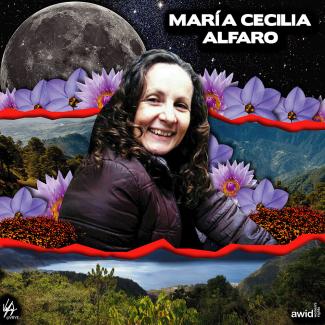
María Cecilia Alfaro Quesada

Maria a consacré la majeure partie de sa vie à l’intégration d’une perspective féministe et de la parité hommes-femmes dans les activités institutionnelles et organisationnelles, ainsi qu’au renforcement des capacités. 

Enfant, Maria s'intéressait beaucoup à l'art, à la communication, à la nature, à la littérature et à la justice, en particulier pour les femmes et les groupes marginalisés. 

Elle a milité en faveur droits sexuels et reproductifs et était membre du Conseil national pour une éducation intégrale à la sexualité. Celleux qui l’aimaient se souviennent d’elle comme d’une « combattante passionnée et infatigable », résolument engagée en faveur des droits des femmes et des enfants


María Cecilia Alfaro Quesada, Guatemala