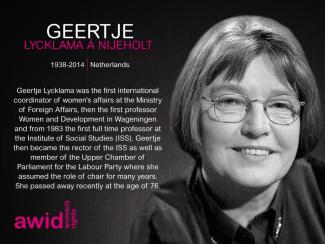
Geertje Lycklama à Nijeholt
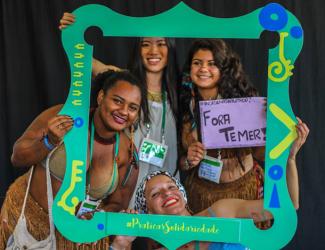
Young feminist activists play a critical role in women’s rights organizations and movements worldwide by bringing up new issues that feminists face today. Their strength, creativity and adaptability are vital to the sustainability of feminist organizing.
At the same time, they face specific impediments to their activism such as limited access to funding and support, lack of capacity-building opportunities, and a significant increase of attacks on young women human rights defenders. This creates a lack of visibility that makes more difficult their inclusion and effective participation within women’s rights movements.
AWID’s young feminist activism program was created to make sure the voices of young women are heard and reflected in feminist discourse. We want to ensure that young feminists have better access to funding, capacity-building opportunities and international processes. In addition to supporting young feminists directly, we are also working with women’s rights activists of all ages on practical models and strategies for effective multigenerational organizing.
We want young feminist activists to play a role in decision-making affecting their rights by:
Fostering community and sharing information through the Young Feminist Wire. Recognizing the importance of online media for the work of young feminists, our team launched the Young Feminist Wire in May 2010 to share information, build capacity through online webinars and e-discussions, and encourage community building.
Researching and building knowledge on young feminist activism, to increase the visibility and impact of young feminist activism within and across women’s rights movements and other key actors such as donors.
Promoting more effective multigenerational organizing, exploring better ways to work together.
Supporting young feminists to engage in global development processes such as those within the United Nations
Collaboration across all of AWID’s priority areas, including the Forum, to ensure young feminists’ key contributions, perspectives, needs and activism are reflected in debates, policies and programs affecting them.
Jemimah Naburri-Kaheru est une stratège internationale accomplie en matière de ressources humaines à impact profond dans la région de la Corne de l'Afrique. Jemimah était auparavant responsable régionale des ressources humaines et du bureau de l'Initiative stratégique pour les femmes dans la Corne de l'Afrique (SIHA) . Son influence s’est étendue jusqu’à la direction des ressources humaines de plus de 70 employé·e·s régionaux·ales, alors que l'organisation connaissait une croissance rapide, avec une augmentation de 40 % de ses revenus annuels. Tout au long de sa carrière, Jemimah a orchestré avec succès des efforts de recrutement, introduit des systèmes de performance basés sur le mérite, de même que supervisé les relations avec les employé·e·s et les politiques RH. Elle a joué un rôle central dans le soutien aux stratégies mondiales de personnel. Avec une formation universitaire en Études de Développement de l'Université de Makerere (Ouganda) et un Master en Gestion des Ressources Humaines, Jemimah est évidemment engagée envers le développement professionnel. Sa contribution à des effectifs hautement performants et à un leadership international en matière de ressources humaines la positionne comme un atout inestimable dans toute entreprise mondiale.
Dada la situación global, nuestra Junta Directiva tomó la difícil decisión de cancelar el Foro que estaba programado en 2021, enTaipei.
Данные будут обработаны в статистических целях, чтобы осветить состояние ресурсного обеспечения феминистских движений во всем мире, и представлены будут только в обобщенном виде. AWID не будет публиковать информацию о конкретных организациях или отображать информацию, которая позволила бы идентифицировать организации по их местоположению или характеристикам, без их согласия.
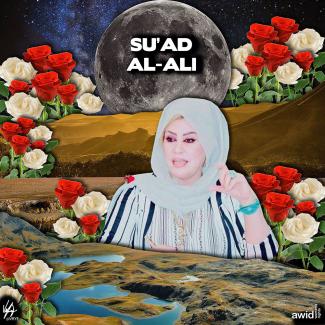
Su’ad was a strong advocate of women’s and children’s rights, and was the head of Al-Weed Al-Alaiami - an Iraqi human rights organisation.
She participated in the July 2018 demonstrations that took place in Basra and several other Iraqi cities protesting unemployment and demanding jobs and proper public services for citizens, as well as calling for the elimination of rampant corruption.
On 25 September 2018, Su’ad was assassinated in the Al-Abbasiyah district in downtown Basra. A video of the incident showed a person approaching her as she was getting into her car, firing a bullet at the back of her head and pointing another bullet at her driver Hussain Hassan, who was injured in the shoulder. Al-Ali was 46 and the mother of four children.
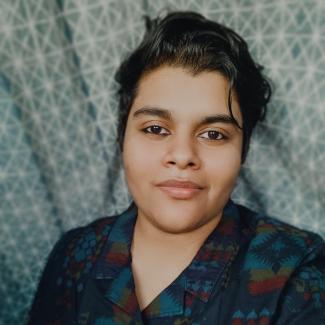
Khaoula Ksiksi is a passionate advocate for justice, equity, and liberation. As a Gender, Equality, Diversity, and Inclusion (GEDI) Advisor, she works to make inclusivity a lived reality, not just a policy, across humanitarian programs and crisis contexts. She collaborates with teams to challenge structural oppression using bold, transformative tools rooted in lived experience.
Her activism began on the frontlines of Tunisia’s anti-racism movement. With Mnemty, she helped push through the country’s first anti-discrimination law, forcing a national reckoning with racial injustice. She later co-founded Voices of Black Tunisian Women to amplify Black women’s leadership, build solidarity networks, and demand visibility in a society that often silences them.
Khaoula is also a founding member of Falgatna, a radical queer-feminist movement fighting for SOGIESC rights and supporting LGBTQI+ communities through direct action, digital resistance, and survivor-centered advocacy.
Previously, she led regional feminist and climate justice projects at the Rosa Luxemburg Foundation in North and West Africa.
At the heart of her work is a deep belief: no one is free until we all are. Her activism is both a fight and a love letter to her people, her communities, and the world we deserve.
L’AWID propose la Boîte à outils « Où est l’argent pour les droits des femmes? » (« Where Is The Money for Women's Rights? », WITM) pour soutenir les individus et les organisations qui souhaitent mener leur propre recherche sur les tendances de financement en adaptant la méthodologie de recherche de l’AWID à une région, une question ou une population spécifique.
La Boîte à outils WITM de l’AWID est le produit de dix ans de recherches. La rméthologie WITM de l’AWID proposent une démonstration politique et pratique des ressources et des étapes qu’exige une solide recherche-action.
L’équipe 'Ressources des mouvements féministes' offre également un soutien technique et politique, avant et pendant le processus de recherche. Parcourez la boîte à outils et contactez fundher@awid.org si vous souhaitez plus de renseignements.
El creciente poder de los actores anti-derechos no se está desarrollando en un vacío. Entender el auge del ultranacionalismo, del poder corporativo irrestricto, del incremento de la represión y de la disminución del espacio cívico resulta clave para contextualizar las amenazas anti-derechos que enfrentamos actualmente.
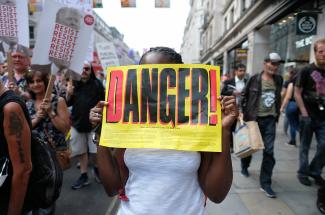
Hoy en día, una cantidad considerablemente mayor a la mitad de la población mundial está gobernada por líderes de extrema derecha. En este escenario, lxs defensorxs de derechos humanos y lxs feministas están trabajando arduamente para «mantenerse firmes» y proteger el multilateralismo y el sistema internacional de derechos humanos. También enfrentan el riesgo de que su compromiso acarree represalias violentas. Al mismo tiempo, estas instituciones están cada vez más sujetas a los intereses del sector privado. Las grandes empresas (en particular, las corporaciones transnacionales) están ocupando asientos en la mesa de negociación y posiciones de liderazgo en una gran cantidad de instituciones multilaterales, incluida la ONU. Este nexo de ultranacionalismo, espacio cívico restringido y captura corporativa está teniendo un tremendo impacto sobre la posibilidad de que, alguna vez, logremos obtener derechos humanos para todxs.
Não. Tem por base a história de 20 anos da AWID de mobilizar mais financiamento de maior qualidade para mudanças sociais lideradas por feministas e é a terceira edição do nosso inquérito “Onde está o dinheiro para organização feminista?”. O nosso objetivo é repetir o inquérito WITM a cada 3 anos.
“Afterwards
After love the first time,
Our naked bodies and minds
A hall of mirrors,
Wholly unarmed, utterly fragile,
We lie in one another's arms
Breathing with care,
Afraid to break
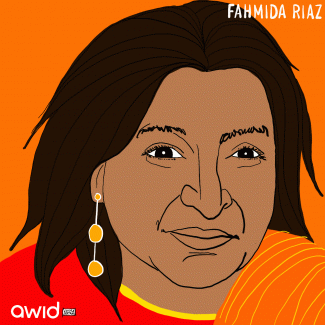
These crystal figurines.” - Fahmida Riaz
Her work faced harsh criticism from conservatives, who accused her of using erotic and “pornographic” expressions in her poetic language.
Fahimida was eventually blacklisted and charged with sedition under Section 124A of the Pakistan Penal Code) during the dictatorship of Zia Ul Haq. Forced into exile in 1981, she spent almost seven years in India before returning to Pakistan.
As part of the preface to “Badan Dareeda” ('The Torn-Bodied'), a collection of poetry published in 1974, she wrote:
The brilliance of Fahmida was in defying any singular logic or categories of gender, nation, religion or culture. She refused to be put in the role of a ‘woman poet’, breaking with traditional definitions of feminine poetry and concepts and themes (ranging from political consciousness, body, culture, desire, religion, home) and knocking down inhibitions put on her gender.
“You have to understand that culture can have no essence. Cultures move, flowing into one another, forming new cultures. Culture is born this way. There is no clash of cultures.”
Fahmida authored more than 15 books on poetry and fiction including her poem ‘Taaziyati Qaraardaaden’ (‘Condolence Resolutions’) that might serve as an appropriate tribute to her life and legacy and a collection of poems (Apna Jurm To Saabit He ‘My Crime Stands Proven’) published in 1988 during her time in exile.
Fahmida Riaz was born in Meerut, India on 28 July 1946 and passed away on 21 November 2018 in Lahore, Pakistan.
We work to achieve gender justice and women’s human rights by strengthening the collective voice, impact and influence of global women’s rights advocates, organizations and movements.
by Karina Ocampo
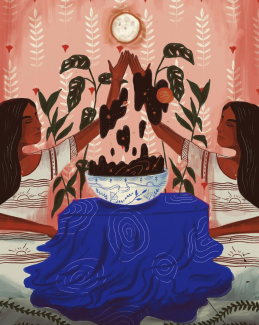
In a hidden corner of Chiapas, Mexico, women and sexual dissidents have come to organize our actions. (...)
< artwork by Sonia Carolina Madrigal Loyola
Alors que les fondamentalismes, les fascismes et autres systèmes d’oppression se métamorphosent et trouvent de nouvelles tactiques et stratégies pour consolider leur pouvoir et influence, les mouvements féministes persévèrent et célèbrent leurs victoires nationales, régionales et internationales.
La [MB1] reconnaissance en 2019 par le Conseil des droits de l’Homme du droit à l’intégrité et à l’autonomie corporelles, par exemple, a marqué une étape cruciale. Des résolutions du Conseil sur la discrimination envers les femmes et les filles admettent cependant un recul lié à des groupes de pression rétrogrades, des conceptions idéologiques ou un détournement de la culture ou la religion pour s’opposer à l’égalité de leurs droits. Des avancées féministes sont aussi notées dans le travail des Procédures spéciales, qui soulignent notamment l’obligation des États de contrer les doctrines de l’idéologie du genre, rappellent à l’ordre les antidroits qui détournent des références à la « culture », et signalent que les convictions religieuses ne peuvent pas servir à justifier la violence ou la discrimination.
إن كانت لديكم/ن أسئلة أو أمور تثير قلقكم/ن، الرجاء التوجه الينا عن طريق هذا النموذج وكتابة "استطلاع أين المال" في العنوان أو راسلنا على witm@awid.org