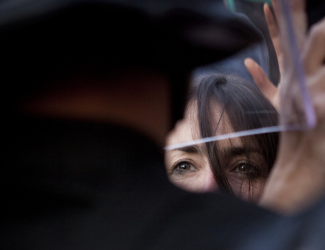
Philippe Leroyer | Flickr (CC BY-NC-ND 2.0)

Special Focus

AWID is an international, feminist, membership organisation committed to achieving gender equality, sustainable development and women’s human rights

Women Human Rights Defenders

WHRDs are self-identified women and lesbian, bisexual, transgender, queer and intersex (LBTQI) people and others who defend rights and are subject to gender-specific risks and threats due to their human rights work and/or as a direct consequence of their gender identity or sexual orientation.

WHRDs are subject to systematic violence and discrimination due to their identities and unyielding struggles for rights, equality and justice.

The WHRD Program collaborates with international and regional partners as well as the AWID membership to raise awareness about these risks and threats, advocate for feminist and holistic measures of protection and safety, and actively promote a culture of self-care and collective well being in our movements.


Risks and threats targeting WHRDs  

WHRDs are exposed to the same types of risks that all other defenders who defend human rights, communities, and the environment face. However, they are also exposed to gender-based violence and gender-specific risks because they challenge existing gender norms within their communities and societies.

By defending rights, WHRDs are at risk of:

  • Physical assault and death
  • Intimidation and harassment, including in online spaces
  • Judicial harassment and criminalization
  • Burnout

A collaborative, holistic approach to safety

We work collaboratively with international and regional networks and our membership

  • to raise awareness about human rights abuses and violations against WHRDs and the systemic violence and discrimination they experience
  • to strengthen protection mechanisms and ensure more effective and timely responses to WHRDs at risk

We work to promote a holistic approach to protection which includes:

  • emphasizing the importance of self-care and collective well being, and recognizing that what care and wellbeing mean may differ across cultures
  • documenting the violations targeting WHRDs using a feminist intersectional perspective;
  • promoting the social recognition and celebration of the work and resilience of WHRDs ; and
  • building civic spaces that are conducive to dismantling structural inequalities without restrictions or obstacles

Our Actions

We aim to contribute to a safer world for WHRDs, their families and communities. We believe that action for rights and justice should not put WHRDs at risk; it should be appreciated and celebrated.

  • Promoting collaboration and coordination among human rights and women’s rights organizations at the international level to  strengthen  responses concerning safety and wellbeing of WHRDs.

  • Supporting regional networks of WHRDs and their organizations, such as the Mesoamerican Initiative for WHRDs and the WHRD Middle East and North Africa  Coalition, in promoting and strengthening collective action for protection - emphasizing the establishment of solidarity and protection networks, the promotion of self-care, and advocacy and mobilization for the safety of WHRDs;

  • Increasing the visibility and recognition of  WHRDs and their struggles, as well as the risks that they encounter by documenting the attacks that they face, and researching, producing, and disseminating information on their struggles, strategies, and challenges:

  • Mobilizing urgent responses of international solidarity for WHRDs at risk through our international and regional networks, and our active membership.

Related Content

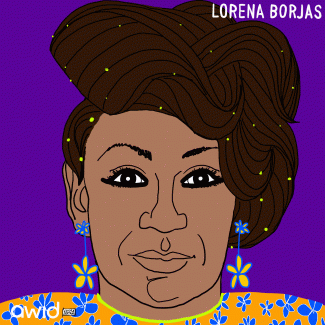
Lorena Borjas

Lorena Borjas, a trans Latina woman and activist, lived and worked in the Jackson Heights neighborhood of Queens, New York City. In those streets, she looked after her community for years, advocating for trans and immigrant rights, supporting survivors of human trafficking and abuse, campaigning for sex workers’ rights and those of people living with HIV and AIDS.

Lorena was strong and tireless in her fight to support, defend, and have the back of those most marginalized and discriminated by transphobia, misogyny and racism. 

“She pushed us to shine authentically, to become a scream of subversion that says, ‘I am here, and I deserve happiness, too.’” - Cecilia Gentili, a trans activist and Lorena’s friend

Having faced numerous traumas and hardships herself, as a trans immigrant woman and victim of human trafficking, Lorena pulled knowledge and emotional memory from the well of her experiences in order to help build and strengthen the community she was part of and which was part of her. Some of the ways she did this was to organize and mobilize support ranging from providing condoms and connecting trans women to different services, to setting up an HIV testing clinic in her own home. 

"She was such a beautiful soul who helped others when her journey was difficult and painful as an immigrant, as a trans immigrant. She believed the trans community needed love, acceptance, and compassion, and she gave it all.” - Luchia Dragosh, QPTV Supervising producer of a documentary about Lorena 

In more than 25 years of activism, she also founded the Lorena Borjas Community Fund together with Chase Strangio (lawyer and trans rights activist). The Fund helps the many different members of her community (and especially trans persons) dealing with immigration challenges to avoid the cycle of arrest-jail-deportation. 

Lorena passed away in March 2020 of complications from COVID-19. 

Her enormous and beautiful legacy will be taken forward through the streets of Queens by the network and community she co-created. 

“We will pick up her work where she left it, work that is essential to the well-being of “mis pajaras” as she called the trans girls of Queens under her wing.” - Cecilia Gentili 


Tributes: 

"Lorena brought light to us when we were living through a very dark time here in New York. She brought us light when we were dealing with the crack epidemic, when we were dealing with the AIDS crisis, dealing with changes in immigration policies." - Cristina Herrera, founder and CEO of Translatina Network and Lorena’s friend

"Lorena has done more than anyone else I know to shine a light on the epidemic of trafficking in transgender communities and to help other trans women escape exploitation."  - Lynly Egyes (represented Borjas on behalf of the Transgender Law Center)

Watch a documentary about Lorena Borjas 

Read a postscript in The New Yorker about Lorena Borjas 

Read an opinion piece in the New York Times by Cecilia Gentilin
Exposición en el Jardín de los Placeres

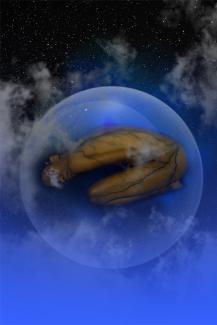
Estas obras son un trabajo colaborativo de fotografías e ilustraciones realizadas por Siphumeze y Katia durante el confinamiento. Muestran narrativas negras queer de sexo y placer, bondage, sexo seguro, juguetes, salud mental y sexo, y mucho más. Fueron creadas para acompañar la antología Touch.

Mental Health
“Mental Health” [«Salud mental»]
Sex and Spirtuality
“Sex and Spirituality” [«Sexo y espiritualidad»]
Orgasm
“Orgasm” [«Orgasmo»]

About the Artists:

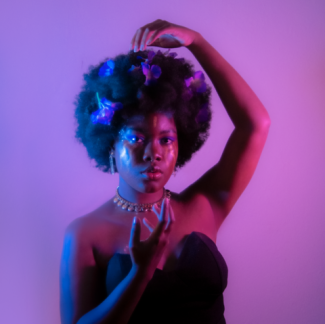
Siphumeze Khundayi portrait
Siphumeze Khundayi es una creadora de arte, fotógrafa y facilitadora interesada en las formas creativas de unir el diálogo y la práctica artística en relación con la identidad queer africana.
 
Es directora creativa de HOLAAfrica!, una colectiva en línea mujerista panafricanista.
 
Sus trabajos de performance individual y en colaboración han sido presentados en numerosos festivales y espacios teatrales, tales como el Ricca Ricca Festival de Japón.
 
En 2017 y 2018 dirigió dos producciones que fueron nominadas a los Naledi Theatre Awards y, en 2020, obtuvo un premio Standard Bank Ovation.
 
Como fotógrafa, participó en Italia en una exposición grupal titulada Flowers of my Soul, organizada por The Misfit Project. Produjo tres publicaciones para HOLAAfrica!, y sus trabajos fueron publicados dentro y como tapa del Volume Two: As You Like de las Gerald Kraak Anthologies.
katia portrait
Katia Herrera es una artista visual digital de 21 años, de la ruidosa ciudad de Santo Domingo, en la República Dominicana. A pesar de que se autodefine como introvertida, su obra es notablemente estruendosa en un mundo que intenta acallar las voces negras. Con títulos como “Black Woman” [«Mujer Negra»], “You Own the Moon” [«La Luna es Tuya»], “Earth Goddess” [«Diosa de la Tierra»], “Forever” [«Por Siempre»] y “Universe Protector” [«Protectora del Universo»], el legado de Herrera estará marcado por su pasión por poner de manifiesto la resistencia y la perseverancia de las personas negras del pasado y del presente, en contraposición a la narrativa de que la piel negra debería solamente ser asociada con la esclavitud.
 
Una de sus obras más hermosas y vivazmente tituladas, “Universe Protector”, representa al alma negra como una entidad divina plena de fortaleza, poder y grandeza. En su juventud, su amor por el diseño gráfico se vio estimulado por el talento artístico de su madre y su padre, y por el programa Photoshop que habían descargado en su computadora para su trabajo profesional de fotografía.

Snippet FEA Unio Otras Photo 3 (EN)

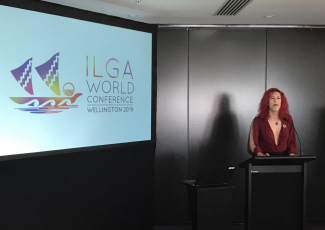
Photo of Sabrina Sanchez speaking next to a screen on Ilga World meeting

Snippet - WCFM getting the money we need - En

Getting the Money We Need | A 101 Guide on Fundraising for Small Grassroots Organizations

 From building prospect funders lists with *templates*, to understand  how to write a solid grant proposal, with ‘Getting the Money we Need’ Guide really we don't have to figure this out alone anymore

Read and download the guide hereText-only version

Also available in Arabic

Membership why page - Kirthi Jayakumar quote

"I participated in a member-only activity and I was particularly moved to see how there was space for everyone to share and that there was no judgment whatsoever. The entire session was energetic and vibrant."

- Kirthi Jayakumar, Founder, The Gender Security Project, India 

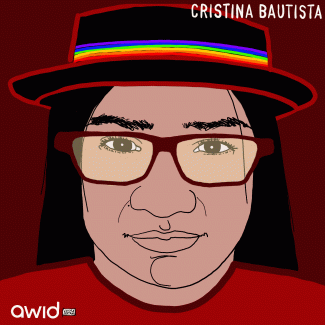
Cristina Bautista

“Si nos mantenemos en silencio, nos matan. Si hablamos (nos matan) también. Así que, hablemos” Cristina Bautista, 2019.

Cristina Bautista fue una integrante de la comunidad Indígena Nasa, cuyo hogar se sitúa en la región del norte del Cauca, en Colombia. Cristina formó parte de la resistencia Nasa como líder y defensora de los derechos de la tierra, pero también como trabajadora social y gobernadora de la reserva Indígena Nasa Tacueyó.

Incansable defensora de los derechos del pueblo Nasa, Cristina habló alto y claro sobre la violencia dirigida contra su comunidad. En un discurso ante las Naciones Unidas, Cristina reclamó la protección de las vidas de las mujeres indígenas, y su participación en las diferentes esferas de la vida. En 2017, Cristina entró en el programa de Becas Indígenas de la Oficina de Derechos Humanos de la ONU y en 2019 recibió una subvención del Fondo de Contribuciones Voluntarias de la ONU para los Pueblos Indígenas.

"Me gustaría sacar a la luz la situación actual de los pueblos indígenas en Colombia, el asesinato de líderes indígenas, la represión de las protestas sociales. El acuerdo de paz, en lugar de ayudar, lo que ha hecho es reforzar el conflicto y la explotación de territorios sagrados en Colombia... En la situación actual, en casi todas las naciones indígenas, como mujeres, estamos trabajando para encontrar un futuro mejor para nuestras familias. No quiero que más mujeres del campo vivan en estas circunstancias. Las  mujeres indígenas necesitamos oportunidades para participar en la vida política, económica, en la sociedad y en la cultura. Hoy me da fuerzas ver a todas estas mujeres aquí y ver que no estoy sola". - Cristina Bautista, 2019

El 29 de octubre de 2019, Cristina fue asesinada junto a cuatro guardias indígenas desarmados en un ataque que, supuestamente, fue llevado a cabo por miembros armados del grupo disidente de las FARC "Dagoberto Ramos".

Según Global Witness, "en los últimos años el asesinato de líderes comunitarios y sociales ha aumentado dramáticamente en Colombia".

"La comunidad Nasa ha alertado repetidamente a las autoridades sobre las amenazas que reciben y que ponen en peligro su seguridad. Sin embargo, a pesar de los esfuerzos que ponen los sucesivos gobiernos colombianos, los pueblos indígenas siguen corriendo grandes riesgos, especialmente, las figuras clave religiosas o comunitarias como Cristina Bautista". - Reunión informativa de la ONU para la prensa (en inglés), 1 de noviembre de 2019.

Puede ver un discurso de Cristina Bautista de agosto de 2019 en el que Cristina denuncia otros casos precedentes de asesinatos a guardias indígenas

Colectivo Morivivi

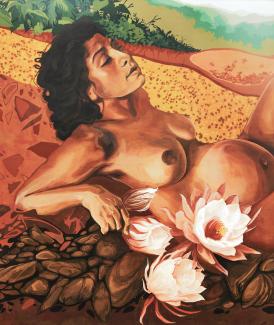
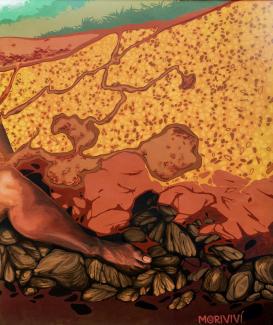
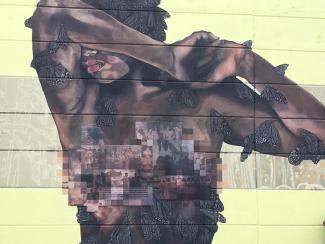
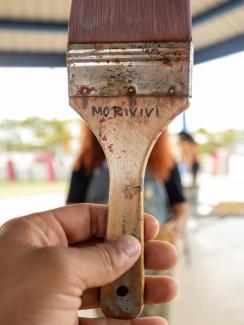
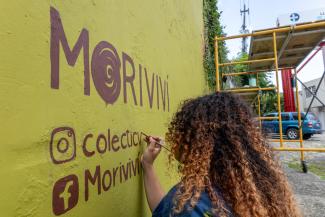
Colectivo Moriviví est un collectif artistique de femmes. Notre production artistique comprend du muralisme, du muralisme communautaire et des performances/actions de manifestation. Notre travail consiste à démocratiser l'art et à amener les récits des communautés portoricaines dans la sphère publique afin de créer des espaces où ils seront validés. Nous croyons qu’à travers l'artivisme, nous pouvons promouvoir la sensibilisation aux questions sociales et renforcer notre mémoire collective.

“Cacibajagua” 2017, Mural Project. Jiangxi, China
“Cacibajagua” 2017, Projet mural. Jiangxi, Chine
“Cacibajagua” 2017, Mural Project. Jiangxi, China
“Cacibajagua” 2017, Projet mural. Jiangxi, Chine
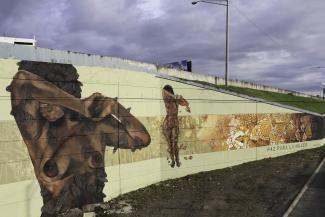
“Paz para la Mujer” 2015, collaboration with Coordinadora Paz para la Mujer Organization. Santurce,
“Paz para la Mujer” (“Paix pour la Femme”) 2015, collaboration avec l’organisation Paz para la Mujer. Santurce, Porto Rico


“Paz para la Mujer” 2015, collaboration with Coordinadora Paz para la Mujer Organization. Santurce, Puerto Rico
“Paz para la Mujer” (“Paix pour la Femme”) 2015, collaboration avec l’organisation Paz para la Mujer. Santurce, Porto Rico
Collectivo Moriri Artwork

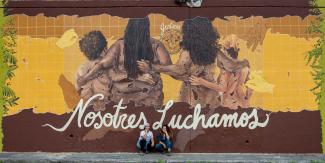
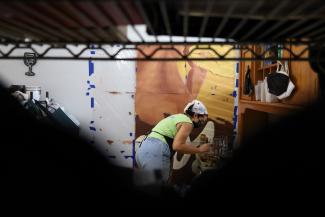
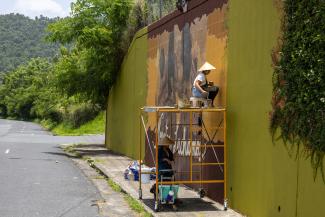
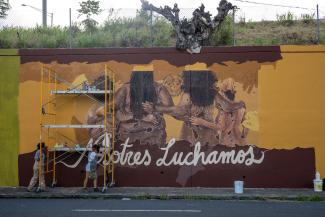
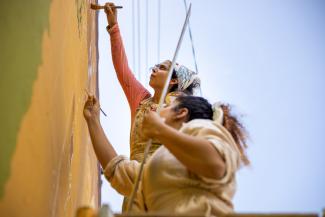
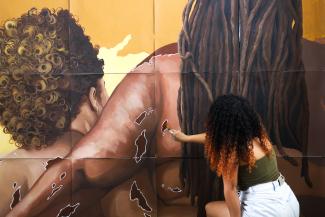
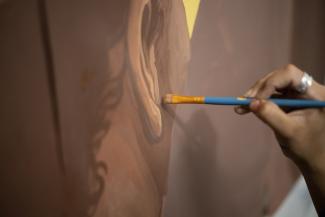
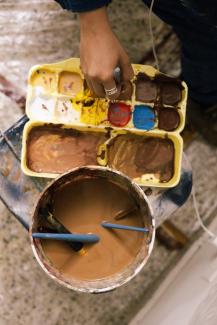
Dans le cadre de sa participation au Groupe de Travail d’Artistes d'AWID, le Colectivo Moriviví a réuni un groupe divers de membres, partenaires et personnel pour faciliter un processus collaboratif visant à imaginer, documenter et déterminer le contenu d'une fresque communautaire par le biais d'un processus de co-création en plusieurs étapes. Le projet a commencé par une conceptualisation à distance avec des féministes de différentes régions du monde réuni·e·s par l'AWID, avant d'évoluer vers sa re-contextualisation et sa réalisation à Porto Rico. Nous avons eu l'honneur de bénéficier de la contribution des artistes locaux·ales Las Nietas de Nonó(@lasnietasdenono), de la participation des femmes locales à la session de peinture communautaire, du soutien logistique de la municipalité de Caguas et du soutien supplémentaire du FRIDA | The Young Feminist Fund.
 
La fresque explore la transcendance des frontières en présentant les corps tels des cartes, dans une étreinte qui met en évidence l'intersection des différentes manifestations, pratiques et réalités féministes.
 
Nous remercions également Kelvin Rodríguez, qui a documenté et capturé les différentes étapes de ce projet à Porto Rico : 

Collectivo Moriri Artwork

À propos du Colectivo Morivivi 

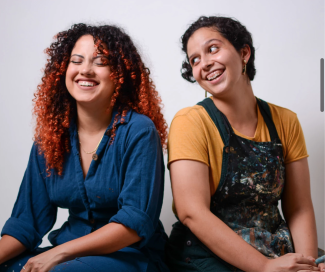
Colectivo Morivivi portrait
Moriviví est un collectif de jeunes femmes artistes qui travaille sur l'art public depuis Avril 2013. Basé·e·s à Porto Rico, nous sommes reconnu·e·s pour la création de fresques et d'arts dirigés par la communauté.
 
Le groupe a débuté dans les festivals d'art urbain locaux. Au fur et à mesure que notre travail devenait plus populaire, les organisations et les dirigeant.e.s communautaires ont commencé à nous contacter. Au départ, nous étions huit lycéen·ne·s qui voulaient peindre une fresque ensemble. Cependant, en huit ans de travail acharné, nous avons été confronté·e·s à de nombreux défis. Nous sommes aujourd’hui dans une période de transition. Au cours de l'année qui vient, nous souhaitons restructurer le collectif en interne. Notre objectif est d'ouvrir de nouvelles opportunités pour les collaborateurs·trices et d'étayer notre processus de prise de décisions par un nouveau système d'évaluation. À long terme, nous aspirons à devenir une école alternative de pratiques artistiques pour celles et ceux souhaitant s'immerger dans la production artistique communautaire.

Snippet FEA Linda Porn Bio (ES)

Linda Porn es una otra heroína de la organización sindical feminista y del activismo de las trabajadoras sexuales a nivel nacional (en España) y transnacional.

Originaria de México, vive en España desde los años 2000. Es trabajadora sexual, activista, madre soltera y artista multidisciplinar.

Partiendo de estas diferentes identidades, utiliza la performance, el videoarte y el teatro para visibilizar las luchas en las intersecciones del transfeminismo, el trabajo sexual, la migración, el colonialismo y la maternidad. Combina el arte y el trabajo sexual mientras cuida a su hija como madre soltera.

Linda también pertenece a colectivos de trabajadoras sexuales que luchan por sus derechos, como el sindicato OTRAS y CATS Murcia. También cofundó el grupo 'Madrecitas' - que visibiliza y denuncia la violencia institucional racista contra las familias migrantes. Violencia de la que ella y su hija fueron objeto por ser trabajadora sexual y madre soltera migrante.

¡No te pierdas su trabajo artístico aquí!

Snippet - WITM Infographic annual budget 2 in 4- EN

Ever Wondered What Budgets for Feminist  Organizations Look Like?

A closer look at actual budgets reveals major income diversity and inequality.


Forum anchors (Forum page)

El Foro de AWID estará organizado alrededor de 6 tópicos interconectados. Estos «ejes» se centran en las realidades feministas.

Explora

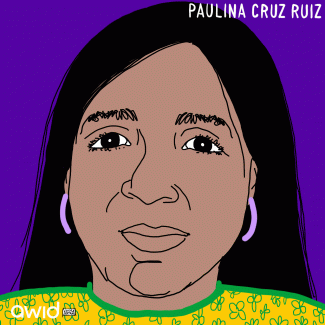
Paulina Cruz Ruiz

Paulina Cruz Ruiz, originaire de Rabinal dans la région de Baja Verapaz au Guatemala, était une défenseuse des droits humains au pouvoir ancestral Maya Achí (autochtone). Elle participait activement à la mobilisation et à la résistance communautaires, notamment via des mesures juridiques contre des projets miniers sur des territoires autochtones, aux effets sévères et néfastes pour leur tissu socioenvironnemental. 

« Le modèle d’industrie extractive promu par le gouvernement guatémaltèque et la construction de projets de développement à grande échelle sur des terres autochtones, sans le consentement des communautés, est source de litiges constants avec les mouvements de résistance. » - Minority Rights Group International (groupe international pour les droits des minorités)

Paulina a également participé à la Marche pour la dignité, la vie et la justice, durant laquelle des milliers de guatémaltèques ont initié, le 1er mai 2019, une marche de huit jours contre la corruption et l’impunité face aux poursuites et aux assassinats de défenseur·e·s des droits humains, des terres ainsi que de leaders paysan·ne·s et autochtones.   

Paulina a été assassinée le 14 septembre 2019 près de chez elle, dans le village de Xococ. 

D’après Minority Rights Group International, « l’une des problématiques constantes qui affecte le plus les communautés mayas tient dans l’accroissement des activités de l’industrie minière. »


En savoir plus sur les mayas au Guatemala (en anglais)

En savoir plus sur la Marche pour la dignité, la vie et la justice (en anglais)

Anti-Rights Trends in Regional Human Rights Systems

Chapter 6

In the African Commission and the Inter-American System, anti-rights actors push essentialist notions of culture and gender to hamper progress on rights and undermine accountability. As we see, anti-rights actors are exerting influence in regional human rights systems, as well as international spaces. 

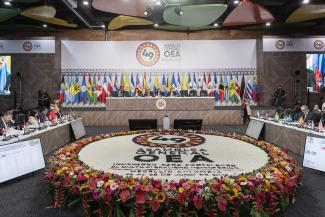
2019 JUN 27 Meeting of the Summit Implementation Review Group in Colombia
© Juan Manuel Herrera/OAS/Flickr
2019 JUN 27 Meeting of the Summit Implementation Review Group in Colombia

The African Commission on Human and Peoples' Rights has begun framing women’s and sexual rights as jeopardising its ability to deal with “real rights” and contrary to “African values”,   setting a worrying anti-rights precedent. The withdrawal of the Coalition of African Lesbians’ observer status is an example of this trend, and points to the way space for feminist, Pan-Africanist engagement is being stifled. 

In the Organization of American States (OAS) and the Inter-American Human Rights System, anti-rights strategies include the NGOization of religious groups, the use of secular discourses, and the co-optation of discrimination frameworks. Anti-rights influence has materialized in a number of ways, including the intimidation of trans activists and the blocking the introduction of progressive language in resolutions.

Table of Contents

  • Silencing Feminists in the African Human Rights System
  • Anti-rights Groups in Latin America: Organization of American States (OAS) General Assembly and the Inter-American Human Rights System
     

Read Full Chapter >

Snippet FEA Principles of work Human Rights (FR)

Une personne parlant dans un haut-parleur.

DROITS HUMAINS

WITM - Refreshed INFOGRAPHIC 3 FR

Comment les féministes s’autofinancent ?

Les organisations féministes et de défense des droits des femmes ne dépendent pas uniquement des financements institutionnels, elles s’autofinancent. Nos mouvements sont animés par la passion, la solidarité, l’engagement politique et le soin collectif.
Ces ressources autonomes et autogénérées sont souvent invisibles dans les budgets, mais elles sont le pilier de notre action collective.

 Explorez les données sur l’autofinancement

Suscríbete para recibir nuestras noticias

* indica un campo requerido
                  
                         
Seleccione los temas sobre los que desea recibir información: