
Ummaya Gabbara
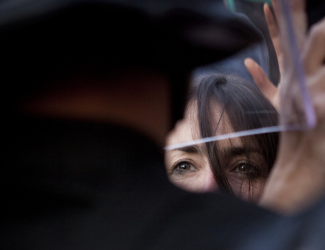
WHRDs are self-identified women and lesbian, bisexual, transgender, queer and intersex (LBTQI) people and others who defend rights and are subject to gender-specific risks and threats due to their human rights work and/or as a direct consequence of their gender identity or sexual orientation.
WHRDs are subject to systematic violence and discrimination due to their identities and unyielding struggles for rights, equality and justice.
The WHRD Program collaborates with international and regional partners as well as the AWID membership to raise awareness about these risks and threats, advocate for feminist and holistic measures of protection and safety, and actively promote a culture of self-care and collective well being in our movements.
WHRDs are exposed to the same types of risks that all other defenders who defend human rights, communities, and the environment face. However, they are also exposed to gender-based violence and gender-specific risks because they challenge existing gender norms within their communities and societies.
We work collaboratively with international and regional networks and our membership
We aim to contribute to a safer world for WHRDs, their families and communities. We believe that action for rights and justice should not put WHRDs at risk; it should be appreciated and celebrated.
Promoting collaboration and coordination among human rights and women’s rights organizations at the international level to strengthen responses concerning safety and wellbeing of WHRDs.
Supporting regional networks of WHRDs and their organizations, such as the Mesoamerican Initiative for WHRDs and the WHRD Middle East and North Africa Coalition, in promoting and strengthening collective action for protection - emphasizing the establishment of solidarity and protection networks, the promotion of self-care, and advocacy and mobilization for the safety of WHRDs;
Increasing the visibility and recognition of WHRDs and their struggles, as well as the risks that they encounter by documenting the attacks that they face, and researching, producing, and disseminating information on their struggles, strategies, and challenges:
Mobilizing urgent responses of international solidarity for WHRDs at risk through our international and regional networks, and our active membership.
Juhi es una entusiasta de las tecnologías. Posee una licenciatura en Ingeniería Informática de la Universidad Tecnológica de Gujarat y formación de posgrado en Telecomunicaciones Inalámbricas y Gestión de Proyectos del Instituto Universitario Humber. Apasionada de la resolución de problemas y de mantenerse a la vanguardia en el panorama tecnológico en constante evolución, Juhi se ha encontrado recorriendo diversas industrias como técnica en Tecnologías de la Información. Ha tenido oportunidad de aplicar sus competencias técnicas en distintos entornos, siempre abrazando los nuevos desafíos con entusiasmo. Más allá de los códigos y los circuitos, le encantan las aventuras de la vida. Explorar nuevos lugares y culturas es para ella una bocanada de aire fresco. Ya sea que se trate de descubrir alguna joya oculta en la ciudad, de probar algún plato exótico o de embarcarse en algún deporte de aventura, Juhi siempre está predispuesta a vivir nuevas experiencias.
Tendemos a pensar en la comunicación del deseo como algo circunscrito a la intimidad de la alcoba y nuestras relaciones personales. Sin embargo, ¿podemos también pensar este tipo de comunicación como una estructura, una práctica que nutre nuestro trabajo, y cómo somos, y cómo actuamos en el mundo?
✉️ By registration only. Register here
📅 Wednesday, March 12, 2025
🕒 6.30–8:00pm EST
🏢 Church Center of the United Nations, 777 United Nations Plaza, New York, NY 10017
🎙️Co-facilitated by: Inna Michaeli, Co-Executive Director
Organizer: Jass, Gender at Work, and Count Me In! Consortium
Nilcéa Freire fue una activista feminista, política y académica brasileña. Como perseverante defensora de los derechos de las mujeres y de las minorías subrepresentadas de su país, su vida y su trabajo acumularon una larga historia de luchas y victorias.
«Mientras se resiste, tenemos que empujar para avanzar y los avances que vamos a poder lograr en este momento, a mi juicio, serán a través de la organización estupenda que las jóvenes mujeres blancas, pero sobre todo, las mujeres negras, están haciendo en todas las capitales, y las grandes ciudades de Brasil.» - Nilcéa Freire
En 1999, se convirtió en la primera mujer Rectora de la Universidad del Estado de Río de Janeiro (UERJ). Desde ese puesto, impulsó la implementación de la primera política de acción afirmativa para estudiantes que se graduaban de escuelas públicas, que exigía un cupo específico para estudiantes negrxs de sectores de bajos ingresos, sistema adoptado por decenas de otras universidades públicas.
Unos años más tarde, Nilcéa encabezó la Secretaría Especial de Políticas para las Mujeres del gobierno del ex-presidente Luiz Inácio Lula da Silva. Desde esta función, lideró la Primera Conferencia Nacional de Mujeres Brasileñas, en la que participaron más de doce mil mujeres de todo el país. El resultado de este trabajo colectivo fue incorporado en el Plan Nacional de Políticas para las Mujeres.
Su compromiso con las mujeres y las personas afrobrasileñas e indígenas se reflejó también en su trabajo de promoción de sus derechos, a través de iniciativas de la Fundación Ford en Brasil, de la cual fue Directora Regional.
La activista feminista Manoela Miklos describió a Nilcéa como «una mujer sin igual».
Nilcéa falleció en Río de Janeiro el 29 de diciembre de 2019 a los 66 años, víctima de un cáncer.
«No tengo palabras ante la noticia de la muerte de la querida Nilcéa Freire. Es demasiado triste saber que partió tan pronto. Siempre formó parte de las filas de quienes no aceptan las injusticias del mundo. Fue Ministra de las Mujeres, una activista, siempre activa en la causa feminista. ¡La extrañaremos mucho!» - Jandira Feghali, Diputada Federal
La feminista brasileña Nilcéa Freire nos dice por qué es importante solidarizarse con Brasil
Patience est une professionnelle internationale des ressources humaines avec plus d'une décennie d'expérience dans la gestion des ressources humaines (RH) dans le secteur non lucratif. Elle a travaillé auparavant chez Mercy Corps en tant que responsable générale des ressources humaines pour l'Afrique. Elle y a appuyé le cycle de vie complet des employé·e·s expatrié·e·s dans la région de l'Afrique de l'Est et de l'Afrique australe et fourni des conseils techniques RH aux responsables des ressources humaines dans les bureaux nationaux de la région africaine. Avant de rejoindre l'équipe internationale des ressources humaines, elle agissait en tant que point focal national ressources humaines et protection, et faisait partie de l'équipe de direction qui traitait de toutes les questions de ressources humaines et de protection. Avant de rejoindre Mercy Corps, elle dirigeait le département des ressources humaines et des opérations de l'organisation de développement des Pays-Bas SNV et était membre de l'équipe de direction nationale. Elle possède également une expérience de consultance en ressources humaines qu'elle a acquise alors qu'elle étudiait encore pour sa licence spécialisée en gestion des ressources humaines. Elle est passionnée de RH, aime travailler avec les gens et considère le bien-être et la protection dans ses valeurs fondamentales et son travail professionnel. Amatrice de sport, Patience peut également être aperçue sur un terrain de basket, un court de tennis ou encore un terrain de football.
Más que una divertida excentricidad para explorar las sensaciones, el BDSM puede ser una forma de abordar el dolor y el trauma emocionales. Ha sido un medio de sanación sexual para mí, pues me ha permitido una forma radical de liberación.

Filter your search by funders’ priority support areas that speak to your organizing efforts
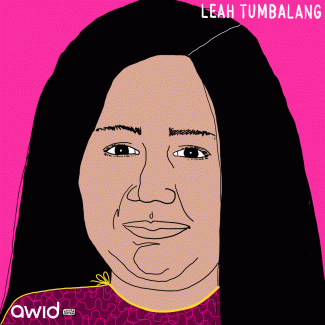
Leah Tumbalang était une femme lumad de Mindanao, aux Philippines. L’histoire du peuple autochtone Lumad recouvre des générations de résistance à l'exploitation minière à grande échelle par les entreprises, la protection des domaines ancestraux, des ressources et de la culture, et la lutte pour le droit à l'autodétermination.
Leah était une leader lumad, ainsi qu’une dirigeante du Kaugalingong Sistema Igpasasindog tu Lumadnong Ogpaan (Kasilo), une organisation paysanne lumad plaidant contre l'arrivée des sociétés minières à Bukidnon, dans la province de Mindanao. Elle s’est montrée inébranlable dans son activisme antimines, militant avec ferveur contre les effets dévastateurs de l'extraction minière sur l'environnement et les terres des peuples autochtones. Leah était également une organisatrice de la liste du parti Bayan Muna, membre du parti politique de gauche Makabayan.
Depuis près d’une décennie, Leah (ainsi que d’autres membres de Kasilo) recevait des menaces du fait qu'elle codirigeait l'opposition contre le déploiement de groupes paramilitaires soupçonnés d’être soutenus par des intérêts miniers.
« En tant que leader des Lumad au sein de leur communauté, elle est au premier plan pour lutter en faveur de leurs droits à la terre ancestrale et à l'autodétermination ». - Organisation régionale lumad de Kalumbay
Être en première ligne de la résistance implique également souvent d’être la cible de violences et victime de l’impunité. Leah a non seulement reçu de nombreuses menaces de mort, mais elle a été assassinée le 23 août 2019 à Valencia, dans la province de Bukidnon.
Selon un rapport de Global Witness, « les Philippines sont le pays à avoir été le plus touché en chiffre absolu » pour ce qui est des meurtres d’activistes écologistes en 2018.
Lisez le rapport du Global Witness, publié en juillet 2019
Les Forums de l’AWID ont toujours été des espaces où les difficiles mais nécessaires conversations ont lieu. Nous accueillons ces propositions dès lors que la personne ou organisation qui la suggère garantit un espace à la fois respectueux et sûr pour celles et ceux qui y prennent part.
Ȃurea Mouzinho is a feminist economic justice organizer from Luanda, Angola, with a 10-year career in research, grant-making, advocacy, and movement-building for women's rights and economic justice across Africa and the global south. Currently the Program Manager for Africa at Thousand Currents, she also serves on the Feminist Africa Editorial Board and is a member of Ondjango Feminista, a feminist collective she co-founded in 2016. A new mom to a Gemini boy, urea enjoys slow days with her young family and taking long strolls by the beach.
She occasionally tweets at @kitondowe.
5 pm, tonight.


The handwriting on the invitation—
coily and brusque—
I’ve seen it five times in five years.
My body rouses,
feverish.
I need to fuck myself first.
The tide is high tonight and
I get
off.
I want to slow everything down,
taste time and space, etch them
into memory.
*
I’ve never been to this part of town before.
Unknown places excite me,
the way limbs and veins and bones
resist decay,
their fate uncertain.
At the door, I think twice.
The hallway is pitch black
and it makes me pause.
On the other side,
a portal of smell and color
opens like a curse,
into a sunny afternoon.


The breeze
makes my hair dance,
piques its curiosity,
compels it to move.
I hear the wheelchair whirring,
shaping the shadows.
Then I see them:
a lynx face
and a body like mine
and I find myself desiring both
again.
The creature motions me closer.
Their gestures write a sentence;
as I move toward them,
I notice its details:
wither, flesh, bliss
On their command, the vine that covers the hallway
hugging warm stones,
snakes up the wall.
It becomes a verb,
“to climb,”
and I’m reorientated when their claws point
to the vine-bed in the center.
I hear the wheels behind me,
then that sound.
It reverberates
like no other.
Their long black wings
elevate toward the ceiling
then they lunge forward.
The feline vision scans every detail,
every change,
every longing.
Can desire liquefy your muscles?
Can it act sweeter than the strongest
of tranquilizers?


A lynx sews the world
across our differences,
weaving lace around my knees.
Can desire crush the distance of the world,
compressing the seconds?
They come closer still,
lynx eye meeting human eye,
sniffing the air,
turning body into
urgency.
They beat down their wings.
Stirred,
the vines tangle around my waist/waste.
Their tongue thins time,
shifting grounds,
soothes, with their magic,
what stirs beneath.
I see the world in you, and the
world is exhausted.
Then they plead:
Let me feast on you.
ÉCONOMIES DES SOINS AGROÉCOLOGIE ET SOUVERAINETÉ ALIMENTAIRECOOPÉRATIVISME FÉMINISTESYNDICALISME FÉMINISTE
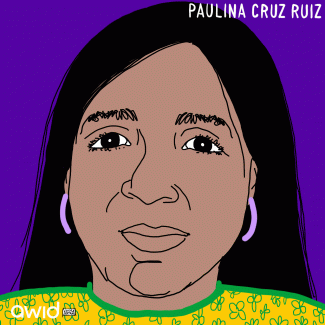
Paulina Cruz Ruiz, from the Rabinal, Baja Verapaz region of Guatemala, was an ancestral Maya Achí (Indigenous) authority and a human rights defender.
She was actively involved in community organizing and resistance, including legal measures against mining projects on Indigenous territory, projects that would severely affect and damage the socio-environmental fabric.
“The extractive industry model promoted by the Guatemalan government and the construction of large-scale development projects on indigenous lands without community consent has been a source of ongoing disputes with resistance movements.” - Minority Rights Group International
Paulina was also part of the March for Dignity, Life and Justice, in which on 1 May 2019 thousands of Guatemalans started a march of eight days against corruption and impunity in the prosecution and assassinations of human rights, peasant and Indigenous leaders and land defenders.
Paulina was murdered on 14 September 2019 near her home in the village of Xococ.
According to the Minority Rights Group International, “one of the major ongoing issues affecting Mayan communities is the increasing activity of the mining industry.”
Read more about the Mayans of Guatemala
Read more about the March for Dignity, Life and Justice
Simone a 20 ans d’expérience dans le soutien à la gestion et l’administration dans des organisations à but non lucratif, en particulier dans l’enseignement médical post universitaire et la formation aux Technologies de l'Information et de la Communication. Elle possède des qualifications en soutien à la gestion et en études parajuridiques. Elle est basée en Afrique du Sud, aime voyager et agit en tant que généalogiste amatrice.