Philippe Leroyer | Flickr (CC BY-NC-ND 2.0)

Análisis Especiales

AWID es un organización feminista internacional de membresía, que brinda apoyo a los movimientos que trabajan para lograr la justicia de género y los derechos de las mujeres en todo el mundo.

Defensorxs de Derechos Humanos

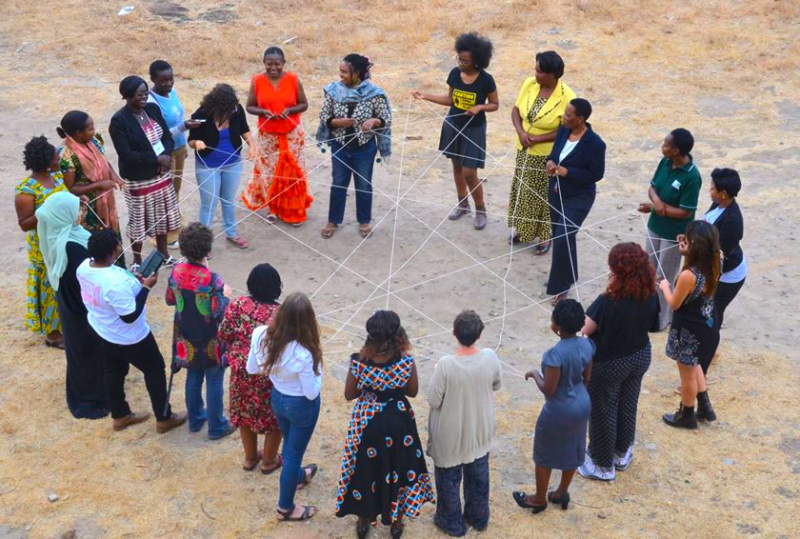
Lxs defensorxs se identifican a sí mismas como mujeres y personas lesbianas, bisexuales, transgénero, queer e intersex (LBTQI) y otrxs que defienden derechos y que debido a su trabajo en derechos humanos están bajo riesgos y amenazas específicos por su género y/o como consecuencia directa de su identidad de género u orientación sexual.

Lxs defensorxs son objeto de violencia y discriminación sistemáticas debido a sus identidades y su inclaudicable lucha por derechos, igualdad y justicia.

El Programa Defensorxs colabora con contrapartes internacionales y regionales así como con lxs afiliadxs de AWID para crear conciencia acerca de estos riesgos y amenazas, abogar por medidas de protección y de seguridad que sean feministas e integrales, y promover activamente una cultura del autocuidado y el bienestar colectivo en nuestros movimientos.


Riesgos y amenazas dirigidos específicamente contra lxs defensorxs

lxs defensorxs enfrentan los mismos tipos de riesgos que todxs lxs demás defensorxs de derechos humanos, de comunidades y del medio ambiente. Sin embargo, también están expuestas a violencia y a riesgos específicos por su género porque desafían las normas de género de sus comunidades y sociedades.

Por defender derechos, lxs defensorxs están en riesgo de:

  • Ataques físicos y muerte
  • Intimidación y acoso, incluso en los espacios virtuales
  • Acoso judicial y criminalización
  • Agotamiento

Un enfoque integral y colaborativo de la seguridad

Trabajamos de manera colaborativa con redes internacionales y regionales y con nuestrxs afiliadxs

  • para crear conciencia de las violaciones de derechos humanos contra lxs defensorxs y de la violencia y discriminación sistemáticas que enfrentan
  • para fortalecer los mecanismos de protección y asegurar respuestas más oportunas y efectivas para lxs defensorxs que están en riesgo

Trabajamos para promover un enfoque integral de la protección que incluya:

  • remarcar la importancia del autocuidado y el bienestar colectivo, y reconocer que el significado de cuidado y bienestar puede variar entre las diferentes culturas;
  • documentar las violaciones dirigidas contra lxs defensorxs usando una perspectiva feminista interseccional;
  • promover el reconocimiento y celebración social del trabajo y la resiliencia de lxs defensorxs; y
  • construir espacios ciudadanos que conduzcan al desmantelamiento de las desigualdades estructurales sin restricciones ni obstáculos.

Nuestras acciones

Nos proponemos contribuir a un mundo más seguro para lxs defensorxs, sus familias y comunidades. Creemos que actuar por los derechos y la justicia no debe poner en riesgo a lxs defensorxs, sino que debe ser valorado y celebrado.

  • Promoviendo la colaboración y coordinación entre organizaciones de derechos humanos y organizaciones de derechos de las mujeres en el plano internacional para fortalecer la capacidad de respuesta en relación a la seguridad y el bienestar de lxs defensorxs.

  • Apoyando a las redes regionales de defensorxs y de sus organizaciones, tales como la Iniciativa Mesoamericana de Mujeres Defensorxs de Derechos Humanos y la WHRD Middle East and North Africa  Coalition [Coalición de Defensorxs de Derechos Humanos de Medio Oriente y África del Norte], promoviendo y fortaleciendo la acción colectiva para la protección, poniendo el énfasis en establecer redes de solidaridad y protección, promover el autocuidado y la incidencia y movilización por la seguridad de lxs defensorxs.

  • Aumentando la visibilidad y el reconocimiento de lxs defensorxs y sus luchas, así como de los riesgos que enfrentan, a través de la documentación de los ataques que sufren, e investigando, produciendo y difundiendo información sobre sus luchas, estrategias y desafíos.

  • Movilizando respuestas urgentes de solidaridad internacional para lxs defensorxs que están en riesgo a través de nuestras redes internacionales y regionales y de nuestrxs afiliadxs activxs.

Contenido relacionado

Snippet - WITM Who should - AR

من يجب أن يجيب على الاستطلاع؟

الاستطلاع هذا مخصّص للمجموعات، المنظمات والحركات التي تعمل بالأساس أو فقط على حقوق النساء، أفراد مجتمع الميم - عين، والحقوق الجندرية، في جميع السياقات، على جميع المستويات، وفي جميع المناطق. إن كان واحد من هذه المبادئ اساسًا لمجموعتكم/ن، تنظيمكم/ن أو شبكتكم/ن، أو أي نوع تنظيم آخر، إن كان مسجلاً أم لا، جديداً أو طويل العمر، ندعوكم/ن للإجابة على الاستطلاع.

exclamation mark

*في الوقت الحالي، لا نطلب من الأفراد أو الصناديق النسوية أو النسائية تعبئة الاستطلاع.


تعرف على المزيد حول الاستطلاع: راجع/ي الأسئلة الشائعة

راجع/ي الأسئلة الشائعة

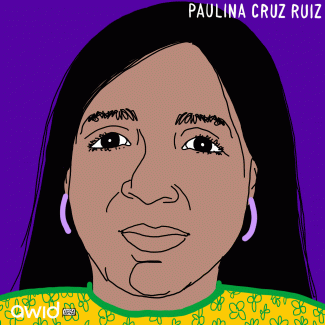
Paulina Cruz Ruiz

Paulina Cruz Ruiz, originaire de Rabinal dans la région de Baja Verapaz au Guatemala, était une défenseuse des droits humains au pouvoir ancestral Maya Achí (autochtone). Elle participait activement à la mobilisation et à la résistance communautaires, notamment via des mesures juridiques contre des projets miniers sur des territoires autochtones, aux effets sévères et néfastes pour leur tissu socioenvironnemental. 

« Le modèle d’industrie extractive promu par le gouvernement guatémaltèque et la construction de projets de développement à grande échelle sur des terres autochtones, sans le consentement des communautés, est source de litiges constants avec les mouvements de résistance. » - Minority Rights Group International (groupe international pour les droits des minorités)

Paulina a également participé à la Marche pour la dignité, la vie et la justice, durant laquelle des milliers de guatémaltèques ont initié, le 1er mai 2019, une marche de huit jours contre la corruption et l’impunité face aux poursuites et aux assassinats de défenseur·e·s des droits humains, des terres ainsi que de leaders paysan·ne·s et autochtones.   

Paulina a été assassinée le 14 septembre 2019 près de chez elle, dans le village de Xococ. 

D’après Minority Rights Group International, « l’une des problématiques constantes qui affecte le plus les communautés mayas tient dans l’accroissement des activités de l’industrie minière. »


En savoir plus sur les mayas au Guatemala (en anglais)

En savoir plus sur la Marche pour la dignité, la vie et la justice (en anglais)
L’économie solidaire

Définition

L'économie solidaire (qui inclut l'économie coopérative et l’économie du don) est un cadre alternatif qui adopte différentes formes dans divers contextes et qui est ouvert au changement continuel.

Ce cadre est fondé sur les principes suivants :

  • la solidarité, l’entraide et la coopération
  • l'équité dans toutes les dimensions
  • le bien-être social
  • la durabilité
  • la démocratie sociale et économique
  • le pluralisme

Dans une économie solidaire, les producteurs mettent en place des processus économiques qui sont intimement liés à leurs réalités, à la préservation de l'environnement et à la coopération mutuelle.

Le contexte

Selon la géographe féministe Yvonne Underhill-Sem, l'économie du don est un système économique dans lequel les biens et les services circulent entre les personnes sans accord explicite de leur valeur, ou sans impliquer de réciprocité ultérieure.

Derrière le don il y a la relation humaine, la bienveillance et l'attention portée à la nurturance* de toute la société, non seulement limitée à soi-même et aux proches. Il s’agit ici de la notion du collectif.

Par exemple, dans la région du Pacifique, cette approche comprend la collecte, la préparation et le tissage de ressources terrestres et marines pour fabriquer des tapis, des ventilateurs, des guirlandes et des objets de cérémonie. Elle comprend également l'élevage du bétail et le stockage des récoltes saisonnières.

Perspective féministe

Pour les femmes, les incitations à s’engager dans des activités économiques sont diverses et multiples, allant de la réalisation d’aspirations de carrière afin de gagner de l'argent pour une vie confortable à long terme, à gagner de l'argent pour joindre les deux bouts, à rembourser une dette ou encore à échapper aux corvées de la vie courante.

Pour s’adapter aux divers environnements au sein desquels les femmes travaillent, le concept d'économie solidaire est en développement permanent et est continuellement discuté et débattu.


Pour en savoir plus sur cette proposition :

Glossaire :

Nurturance : Nourriture et soins émotionnels et physiques donnés à quelqu'un.

Snippet FEA What Challenges Story 3 (FR)

À quels défis les personnes Trans et Travesti sont-elles confrontées en Argentine ?

Snippet - WITM To Strengthen - RU

Укрепить наш коллективный голос и влияние на увеличение и улучшение финансирования феминистских организаций, организаций по защите прав женщин, ЛГБТКИ+ и смежных организаций по всему миру

Feminist propositions: Glossary of terms

Capitalism:

An economic system in which production and consumption patterns are based on profit using privately owned capital goods and wage labour. The system builds on individual wealth and capital accumulation at the lowest cost to the investor, with little regard for the societal costs and exploitation of the workforce - both paid and unpaid.

Commodification of land:

The conversion of land and activities related to it (like agriculture) into commodities that can be bought or sold for profit.

International Financial Institutions (IFIs):

Institutions (like the World Bank, International Monetary Fund, or regional development banks) that provide loans to countries lacking sufficient money to cover funding shortfalls or to finance development projects. Historically, the lending policies of these institutions have been determined by economically powerful Western countries and private enterprises. Loans to low-income countries in particular typically include conditionalities that prompt economic reforms in these countries to support neo-liberalism.

Neoliberalism:

A set of economic and political theories in which market forces, rather than governments, determine key aspects of the economy with governments acting to support globalized markets and the interests of capital. Neo-liberal economic policies typically include promotion of free trade, privatisation, reduced government spending on social programs, subsidies and tax exemptions for business, deregulation of financial sector and foreign investments, low taxes on the wealthy and corporations, flexible labour and weak environmental protection.

Patriarchy:

Refers to systemic and institutionalized male domination embedded in and perpetuated by cultural, political, economic and social structures and ideologies. Hetero-patriarchy in addition, is a patriarchal system that is also based on the belief that heterosexuality is the only normal and acceptable sexual orientation.

Snippet FEA Brisa Escobar Quote (EN)

"My dreams and objectives have always been the same as those of Lohana Berkins: for the cooperative to continue standing and not to close. To continue to give this place to our travesti comrades, to give them work and a place of support"

Brisa Escobar,
president of the Cooperative

Body

Snippet - WITM About the survey - AR

عن الاستطلاع

  • عالمي ومتنوع يعكس وقائع التمويل للتنظيم النسوي على المستوى العالمي ومقسّم حسب المناطق
  • مقسم حسب النطاق يضع أصوات، وجهات النظر والتجارب المعاشة للحركات النسوية في المركز ويسلط الضوء على ثروتها، شجاعتها وتنوّعها، كل واحدة في نطاقها
  • مشترك: تم تطوير وتجربة الاستطلاع باستشارة أعضاء/ عضوات جمعية حقوق المرأة في التنمية والشركاء/ الشريكات في الحركة
  • تكميلي يساهم ويعزّز الأدلة المتواجدة عن وضع التمويل للحركات النسوية والنسائية وحركات العدالة الجندرية من النشطاء/ الناشطات، الممولين/ات النسويين/ات والحلفاء/ الحليفا
  • متعدد اللغات متاح باللغة العربية، الانجليزية، الفرنسية، البرتغالية، الروسية والاسبانية
  • إعطاء الأولوية للخصوصية والأمان نحن ملتزمون/ات بالحفاظ على سرية وسلامة بياناتك. اقرأ/ي سياسة الخصوصية الخاصة بنا لمعرفة المزيد حول التدابير التي نتخذها لضمان حماية معلوماتك.
  • متاح متاح لأشخاص مع درجات سمع، حركة، رؤية، وقدرات فكرية مختلفة، ويحتاج تقريباً 30 دقيقة لإتمامه.
  • قابل للنسخ يمكن للحركات نسخ الاستطلاع لما يتناسب مع نطاقاتها. ستكون أدوات الاستطلاع متاحة لإجراء أبحاث إضافية ومناصرة مشتركة.

Key opposition actors

We are witnessing an unprecedented level of engagement of anti-rights actors in international human rights spaces. To bolster their impact and amplify their voices, anti-rights actors increasingly engage in tactical alliance building across sectors, regional and national borders, and faiths.


This “unholy alliance” of traditionalist actors from Catholic, Evangelical, Mormon, Russian Orthodox and Muslim faith backgrounds have found common cause in a number of shared talking points and advocacy efforts attempting to push back against feminist and sexual rights gains at the international level.

Holy See

  • Key activities: As the government of the Roman Catholic Church, the “Holy See” uses its unique status as Permanent Observer state at the UN to lobby for conservative, patriarchal, and heteronormative notions of womanhood, gender identities and “the family”, and to propagate policies that are anti-abortion and -contraception  

  • Based in: Vatican City, Rome, Italy.

  • Religious affiliations: Catholic

  • Connections to other anti-rights actors: US Christian Right groups; interfaith orthodox alliances; Catholic CSOs

Organization of Islamic Cooperation (OIC)

  • Key activities: Self-described as the “collective voice of the Muslim world”, the OIC acts as a bloc of states in UN spaces. The OIC attempts to create loopholes in human rights protection through references to religion, culture, or national sovereignty; propagates the concept of the “traditional family”; and contributes to a parallel but restrictive human rights regime (e.g. the 1990 Cairo Declaration on Human Rights in Islam).

  • Based in: Jeddah, Saudi Arabia

  • Religious affiliations: Muslim

  • Connections to other anti-rights actors: Ultra conservative State missions to the UN, such as Russia

World Congress of Families

  • Key activities: International and regional conferences; research and knowledge-production and dissemination; lobbying at the United Nations “to defend life, faith and family”

  • Based in: Rockford, Illinois, U.S.

  • Religious affiliation: Predominantly Catholic and Christian Evangelical

  • Connections to other anti-rights actors: Sutherland Institute, a conservative think-tank; the Church of Latter-Day Saints; the Russian Orthodox Church’s Department of Family and Life; the anti-abortion Catholic Priests for Life; the Foundation for African Culture and Heritage; the Polish Federation of Pro-Life Movements; the European Federation of Catholic Family Associations; the UN NGO Committee on the Family; and the Political Network for Values; the Georgian Demographic Society; parliamentarians from Poland and Moldova, etc; FamilyPolicy; the Russian Institute for Strategic Studies; and HatzeOir; C-Fam; among others

Center for Family and Human Rights (C-Fam)

  • Key activities: Lobbying at the United Nations, particularly the Commission of the Status of Women to “defend life and family”; media and information-dissemination (Friday Fax newsletter); movement building; trainings for conservative activists

  • Based in: New York and Washington D.C., U.S.

  • Religious affiliations: Catholic

  • Connections to other anti-rights actors: International Youth Coalition; World Youth Alliance; Human Life International; the Holy See; coordinates the Civil Society for the Family; the Family Research Council (U.S.) and other Christian/Catholic anti-rights CSOs; United States CSW delegation

Family Watch International

  • Key activities: Lobbying in international human rights spaces for “the family” and anti-LGBTQ and anti-CSE policies; training of civil society and state delegates (for example, ‘The Resource Guide to UN Consensus Language on Family Issues’); information dissemination; knowledge production and analysis; online campaigns

  • Based in: Gilbert, Arizona, U.S.

  • Religious affiliations: Mormon

  • Connections to other anti-rights actors: leader of the UN Family Rights Caucus; C-Fam; Jews Offering New Alternatives to Homosexuality (JONAH); the National Association for Research and Therapy of Homosexuality (NARTH); World Congress of Families; CitizenGo; Magdalen Institute; Asociación La Familia Importa; Group of Friends of the Family (25 state bloc)

World Youth Alliance

  • Key activities: Advocacy in international policy spaces including the United Nations, the European Union, and the Organization of American States for “the family”, against sexual and reproductive rights; training youth members in the use of diplomacy and negotiation, international relations, grassroots activities and message development; internship program to encourage youth participation in its work; regular Emerging Leaders Conference; knowledge production and dissemination

  • Based in: New York City (U.S.) with regional chapter offices in Nairobi (Kenya), Quezon City (The Philippines), Brussels (Belgium), Mexico City (Mexico), and Beirut (Lebanon)

  • Religious affiliations: primarily Catholic but aims for interfaith membership

  • Connections to other anti-rights actors: C-Fam; Human Life International; the Holy See; Campaign Life coalition

Russian Orthodox Church

  • Key Activities: The Russian Orthodox Church (ROC), capitalizing on its close links to the Russian state, has operated as a “norm entrepreneur” in human rights debates.  Russia and the ROC have co-opted rights language to push for a focus on “morality” and “traditional values”  as supposed key sources of human rights.  Russia led a series of “traditional values” resolutions at the Human Rights Council and has been at the forefront of putting forward hostile amendments to progressive resolutions in areas including maternal mortality, protection of civil society space, and the right to peaceful protest.

  • Connections to other anti-rights actors: Organization of Islamic Cooperation; Eastern European and Caucasus Orthodox churches, e.g. Georgian Orthodox Church; U.S. Christian Right including U.S. Evangelicals; World Congress of Families; Group of Friends of the Family (state bloc)


Other Chapters

Read the full report

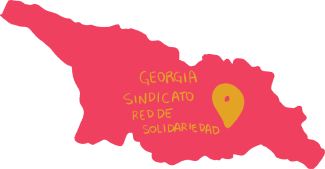
Snippet FEA Map of Georgia (ES)

Esta imagen es un primer plano de Georgia en rosa coral con un alfiler amarillo que indica "Sindicato Red de Solidaridad".

Qual é o objetivo do inquérito WITM?

O objetivo principal do inquérito WITM é chamar a atenção para o estado financeiro dos diversos movimentos feministas, de direitos das mulheres, de justiça de género, de LBTQI+ e de aliados globalmente, e com base nisto, fortalecer ainda mais o argumento para transferir mais recursos de melhor qualidade e poder para os movimentos feministas.

Defendiendo nuestra tierra del poder corporativo

Estas industrias 'extraen' materias primas de la tierra: minería, gas, petróleo y madera son algunos ejemplos.

Este modelo económico explota desenfrenadamente la naturaleza e intensifica las desigualdades norte, donde sus grandes corporaciones se benefician y sur, de donde extraen los recursos.

Contaminación del agua, daño irreparable al medioambiente, comunidades forzadas a desplazarse son algunas de las consecuencias inmediatas.

Lee nuestro reporte de INDUSTRIAS EXTRACTIVAS

Hay alternativas sostenibles para el medioambiente y los derechos humanos de la mujer.


Descubre además cómo nos afecta económicamente

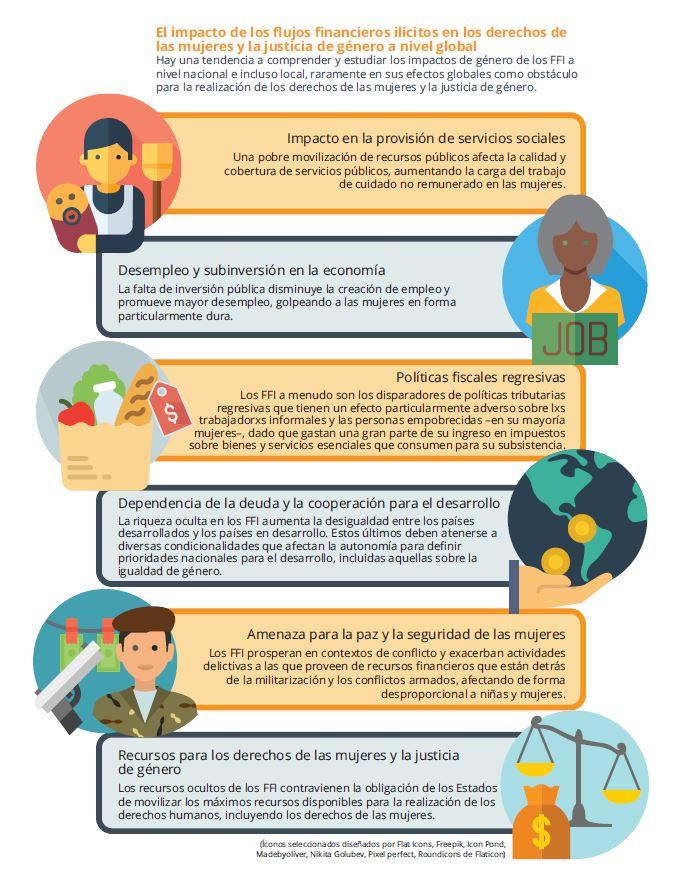
El impacto de los flujos financieros ilícitos en los derechos de las mujeres y la justicia de género a nivel global

Conoce qué son los FLUJOS FINANCIEROS ILÍCITOS

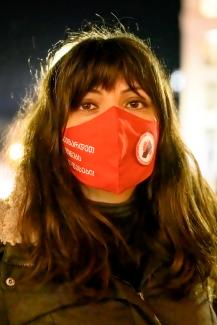
Snippet FEA collaborator and allies Photo 1 (FR)

La photo montre Sopo Japaridze, l'une des cofondatrices de l'Union Solidarity Network. Sopo a de longs cheveux bruns, avec une frange, et des yeux bruns, et porte un masque rouge de l'Union du réseau de solidarité. La photo est prise de nuit.