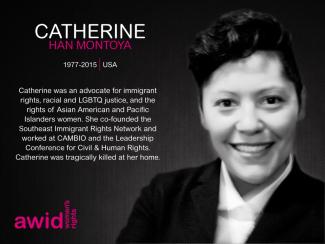
Catherine Han Montoya
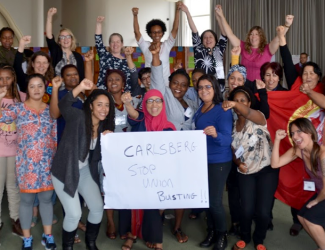
Defensoras de derechos humanos de todo el planeta defienden sus tierras, medios de subsistencia y sus comunidades ante las industrias extractivas y el poder corporativo. Ellas hacen frente a fuertes intereses económicos y políticos que promueven el robo de tierras, el desplazamiento de comunidades, la pérdida de los medios de subsistencia y la degradación del medioambiente.
El extractivismo es un modelo económico y político de desarrollo que mercantiliza la naturaleza y prioriza la ganancia por sobre los derechos humanos y el medioambiente. Arraigado en la historia colonial, refuerza las desigualdades sociales y económicas tanto a nivel local como global. Muchas veces, las mujeres negras, rurales e indígenas son las más afectadas por el extractivismo, y además son notablemente excluidas de la toma de decisiones. Desafiando estas fuerzas patriarcales y neocoloniales, las mujeres se alzan en defensa de los derechos, las tierras, las personas y la naturaleza.
Las defensoras que enfrentan a las industrias extractivas, experimentan una diversidad de riesgos, amenazas y violaciones, incluidas la criminalización, la estigmatización, la violencia y laintimidación. Sus historias dan cuenta de marcados aspectos de violencia sexual y de género. Entre los perpetradores se incluyen autoridades estatales y locales, las corporaciones, la policía, el ejército, las fuerzas paramilitares y de seguridad privada, y en algunos casos, sus propias comunidades.
AWID y la Coalición Internacional de Mujeres Defensoras de Derechos Humanos (WHRDIC por su sigla en inglés) tienen el placer de anunciar «Defensoras de derechos humanos confrontado al extractivismo y al poder corporativo»; un proyecto interregional de investigación que documenta las experiencias vividas por las defensoras de Asia, África y América Latina.
Alentamos a activistas, integrantes de movimientos sociales, la sociedad civil organizada, donantes y responsables de políticas públicas, a leer y utilizar estas producciones para el trabajo de incidencia, con fines educativos y como fuente de inspiración:
«Defensoras de derechos humanos confrontando a las industrias extractivas: un panorama de los riesgos críticos y las obligaciones en materia de derechos humanos» es un informe sobre políticas desde la perspectiva de género (en inglés, pronto disponible en español). Analiza las formas de violaciones y los tipos de perpetradores, hace referencia a las obligaciones relevantes en derechos humanos e incluye recomendaciones de políticas para los estados, corporaciones, la sociedad civil y donantes.
«Tejiendo la Resistencia a través de la Acción: Las Estrategias de las Defensoras de Derechos Humanos contra a las Industrias Extractivas» es una guía práctica que expone formas creativas y deliberadas de acción, tácticas exitosas e inspiradoras historias de resistencias.
El video «Defendiendo a las Personas y al Planeta: Mujeres Confrontando a las Industrias Extractivas» está protagonizado por defensoras de derechos humanos de África, Asia y América Latina, que comparten sus luchas por la tierra y la vida, y hablan de los riesgos y desafíos que enfrentan en su activismo.
«Desafiar al poder corporativo: Las luchas por los derechos de las mujeres, la justicia económica y de género» es un informe de investigación que explica los impactos del poder corporativo y ofrece ideas sobre estrategias de resistencia.
AWID reconoce con gratitud las invaluables contribuciones de cada Defensora de Derechos Humanos que ha sido parte de este proyecto. Esta guía ha sido posible gracias su generosidad y apertura al compartir sobre sus experiencias y lecciones. Su coraje, creatividad y resiliencia son una inspiración para todxs nosotrxs. ¡Muchas gracias!
Feminist Realities is a warm and caring invitation, a kind of en masse-care (versus self-care) act of preservation, an invitation to archive, to take stock of all the work lest it disappear. (...)
Cette communauté est un endroit de connexions, où l’on comprend nos combats individuels comme faisant partie de luttes mondiales, et où l’on peut même parfois danser ! Il n’existe aucun endroit de la sorte en ligne, où être en contact avec des activistes de terrain, qui viennent du monde entier, et forger de la solidarité et de la sororité..- Paz Romero, Argentina
Cynthia Cockburn fue una socióloga feminista, escritora, académica, fotógrafa y activista por la paz.
Estudió los aspectos relacionados con el género en la violencia y el conflicto e hizo importantes contribuciones al movimiento por la paz gracias a sus investigaciones sobre masculinidad y violencia, así como gracias a su activismo local e internacional.
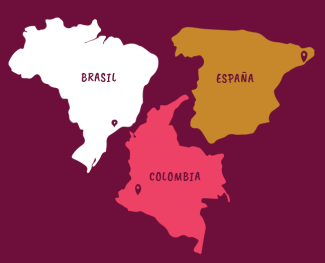
Cynthia aportó un análisis feminista potente sobre la militarización y la guerra, y fue una de las académicas cuyos escritos y estudios demostraron claramente cómo la violencia de género desempeñaba un papel clave en la perpetuación de la guerra. Al trabajar en estrecha colaboración con activistas por la paz en distintos países en conflicto, sus conclusiones abarcaron diversos contextos, entre ellos: Irlanda del Norte, Bosnia y Herzegovina, Israel/Palestina, Corea del Sur, Japón, España y el Reino Unido. También logró incluir en sus investigaciones y escritos académicos una interpretación sobre cómo la violencia se experimenta como un continuo de tiempo y escala y cómo se percibe de forma muy diferente cuando se analiza desde la perspectiva de género.
En sus propias palabras: "El género nos ayuda a ver la continuidad, la conexión entre los casos de violencia".
Cynthia conectó su trabajo de investigación con el activismo que sostuvo a nivel local e internacional con los movimientos por la desmilitarización, el desarme y la paz. Ayudó a iniciar el campamento de paz de las mujeres de Greenham Common, que defendía el desarme nuclear universal en Gran Bretaña, y formó parte también de la creación del capítulo londinense de Women in Black [Mujeres de Negro]. A lo largo de las décadas, Cynthia organizó y participó en vigilias semanales locales y en el coro político Raised Voices [Elevar las Voces], para el que, además de cantar, escribió varias letras de canciones que forman parte de su repertorio.
Su activismo la llevó a apoyar también el trabajo de la Women’s International League for Peace and Freedom [Liga Internacional de Mujeres por la Paz y la Libertad] (WILPF, por su siglas en inglés), el European Forum of Socialist Feminists [Foro Europeo de Feministas Socialistas] y Women Against Fundamentalism [Mujeres contra el Fundamentalismo].
"Cynthia arrojó claridad feminista, tejió comunidades feministas, cantó canciones de paz, escuchó, escuchó, escuchó, observó los pájaros - y detuvo el tráfico. Siempre estaré agradecida y en deuda con ella, la otra 'Cynthia'" - Cynthia Enloe.
Cynthia nació en julio de 1934 y falleció en septiembre de 2019, a la edad de 85 años.
por Amal Amer
Rezo con mi familia por primera vez en seis años envueltx en un keffiyah que recogí de un contenedor de basura. (...)
arte: «Angels go out at night too» [Los ángeles también salen de noche], Chloé Luu >
#FreezeFascisms
A 30 años de la adopción de la Declaración y Plataforma de Acción de Beijing, existe una ola creciente de fascismos que ejercen gran poder e influencia en los espacios multilaterales, todo un retroceso para las conquistas de igualdad de género y la protección de los derechos humanos en el mundo entero.
En torno a la CSW69, estamos organizando, en conjunto y de forma horizontal, una serie de valientes espacios sobre el terreno y en línea a fin de compartir estrategias y forjar un poder feminista más allá de Beijing +30. Nuestra presencia colectiva trastorna las prácticas institucionales de exclusión en dichos espacios y, a la vez, apoya los procesos de organización de los movimientos en torno a las alternativas feministas a los sistemas de opresión.
Súmate a las conversaciones desde el 10 al 21 de marzo de 2025, mientras transformamos de forma colectiva la CSW69 en espacios para y sobre la resistencia y la solidaridad.
Interviewed by Chinelo Onwualu

 |
Naike Ledan is a social justice defendant, a committed feminist that brings forward 20 years of experience in human rights and health justice advocacy, women’s empowerment, the fight for universal access to basic services and social inclusion, as well as civil society capacity building. She has built extensive work in Canada, West and southern Africa, as well as in Haiti, in civil rights advocacy, capacity building for CSOs, while emphasising the social determinants of structural exclusion. She values the principles of shared leadership, anticolonial, anti-oppressive, and anti-patriarchal spaces. |
Chinelo You’re billed as a trans rights activist; I’m curious about how you made that journey.
Naike So, I grew up in Haiti until I was 18, then I lived in Montreal for 19 years. Coming back to Haiti in 2016, I thought I would be coming back home, but the place had changed and I had to readjust. I did not necessarily reconnect in the way that I’d expected to with childhood family and friends. I came back as an expat with a comfortable work situation, and I felt very much like a foreigner for a very long time. And at the same time, I felt very much at home because of the language, the understood silence, the not having to explain when we start singing a commercial – you know, that thing we share, that energy, that space, that spirit.
What helped me was, I loved the work of going into the country and documenting people’s knowledge. So I left the comfort. I became a country director of a regional organisation that was queer as fuck! Most of my work was to find resources and build the capacity of civil society. My strategy was to go into the countryside, look for all these little organizations, help build their capacity, and fund them. I was not interested in politicians and shaking hands and taking pictures
Chinelo Tell me about the workshop you conducted with AWID for the festival. What was it about and what was the context?
Naike International media doesn’t really talk about Haiti, but with a political environment that is as bad as ours, the economic environment is even more catastrophic. Being a more middle class Haitian, speaking different languages, having different passports, I was initially hesitant to take the space. But I often see myself as a bridge more than someone that would talk about themself. That is how I came to invite Semi, who is a brilliant young trans woman from outside Port-au-Prince, to take the space to talk for herself and walk us through the ecosystem of the realities for trans women in Haiti. We ended up building a session about uninclusive feminism – or, I would say, formal feminist spaces – and how trans girls in Haiti do not have spaces where they can contribute to women’s knowledge and sharing of women’s realities. So the AWID festival was the opportunity for me to give the space to the women who should have it. We had a wonderful time; we had wine online while hosting the conversation. My co-facilitator, Semi, shared what it is like to be a trans child/girl/woman at different stages of her life. She also shared the dangers of the street, of poverty, of exclusion, of “not passing,” and her victories as well.
Chinelo What is the relationship of trans women to feminist organizations in Haiti? What has been your experience with that?
Naike It’s been really hard – heartbreaking, actually – the experience of trans women in Haiti. From not existing at all to just being extremely sexualized. The other thing that’s been happening is how they’re being killed, and how those killings have gone unreported in the media. This is how non-existent, how erased trans women are. They’re everywhere but not in job settings, not in feminist settings, not in organizational settings. Not even in LGBT organizations. It’s only recently, and because of a lot of advocacy push, that some of these organization are kind of readjusting, but in feminist spaces, this is still out of the question. We are still having to deal with the old exclusionary discourse of “They’re not women. Of course, if they can pass…” The culture of passing, it’s a risk management conversation – how much you pass and how much you don’t pass and what it means for your body and the violence it inflicts. In the trans-exclusionary realities we live in, which are reproduced in a lot of feminist spaces, those that pass completely may be considered girls, but only to a certain extent. But how about falling in love, how about having a conversation, how about being in the closet, how about wanting a certain aesthetic, or a career? So really, the conversation about hormone therapy becomes about risk reduction, as Semi herself shared at the workshop. But we don’t have the option of hormone therapy, we don’t have the medical framework nor the system to support those who would like to pursue that option.
Chinelo When you talk about the way that trans people and queer people are thought of in society, it sounds like it might be similar to Nigeria, which can be a deeply homophobic environment.
Naike Haiti is a very complex country in a very beautiful way. Nothing is simple, you know, nothing is ever one way. Haitians are very tolerant – and they’re also very homophobic. You’re going to find regions in the countryside where people aren’t that homophobic at all because all the Vodou temples there, and this is a religion that respects life. One basic principle of the Vodou religion is that all children are children. So, there is no right or wrong in the religion. For the longest time, people thought of Haiti as a haven, a place where people are tolerant – we’re talking 70s, 80s, pre-HIV, 90s even. Then you had the earthquake [in 2010] where around 300,000 people died. And then all this money came from the south of the US through the Evangelicals to rebuild the country and find Jesus. So, the homophobia in Haiti is very recent. In the depth, in the heart of the soul of the culture, I cannot really say that it is homophobic. But in the everyday life, it surely lands on the skin of queer people, that violence. And that of women, of poor women, of dark women as well, because colorism runs deep in the Caribbean.
Chinelo How have you managed this? What’s been your strategy for survival?
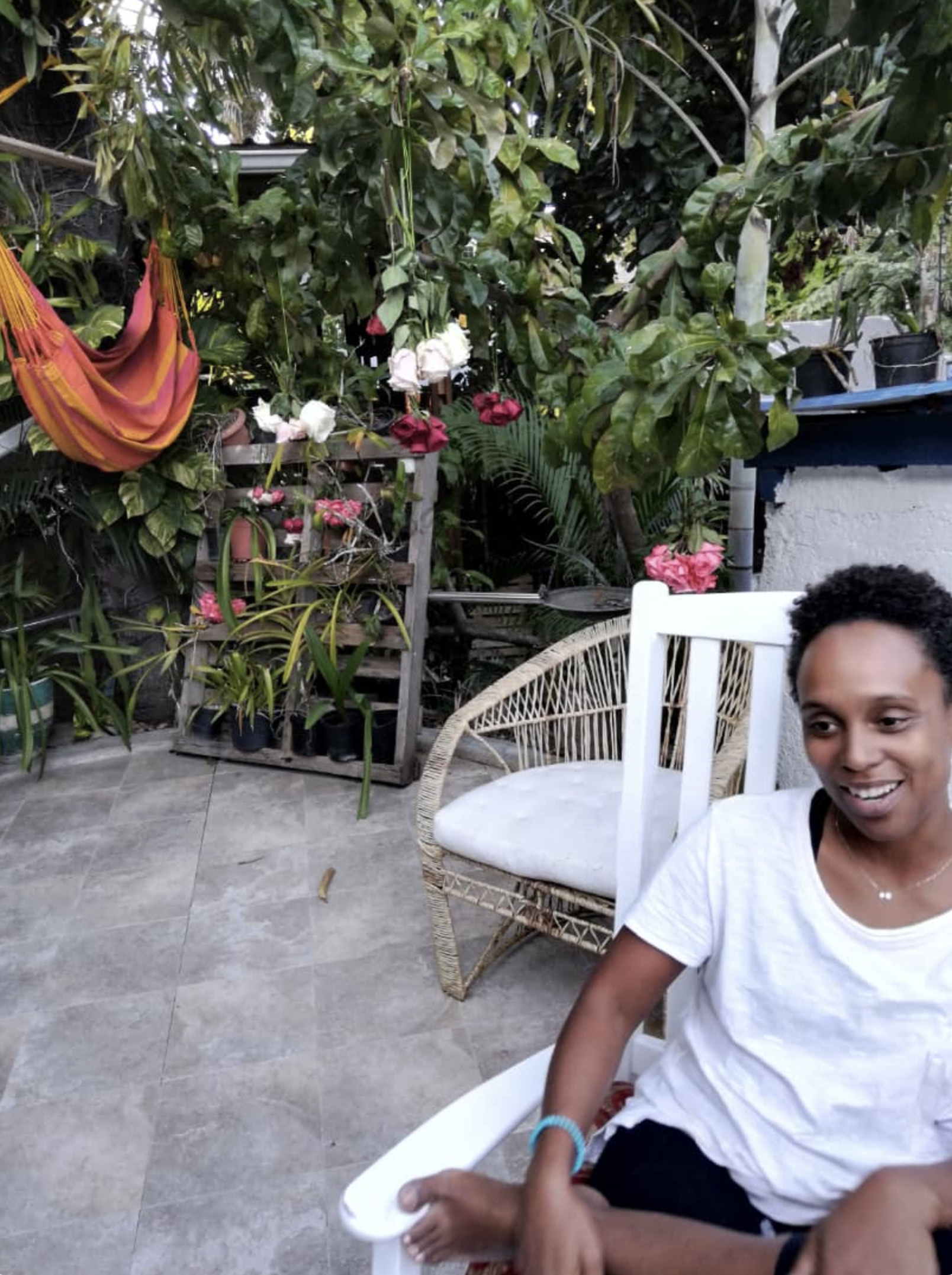
Naike I’m really in love with my work. I love working. When I first arrived, I was working with this horrible NGO but I was doing amazing work. I was always in the countryside, conversing and learning from people, from women. And that filled my heart for so long because I’m very much in love with my culture, with black people, with black women – old black women, black babies. It just fills me up in a spiritual way. When we were in Canada my kids were in these all-white schools and tokenized. They did not speak Creole nor French. And now, they’re running free in the yard and starting to fight in Creole. I also found hubs of survival with the people I met. I created bonds with the queers and others who were weirdos like me and it’s been really wonderful. But now I’m struggling because I don’t feel safe in Haiti anymore. We have about 40 kidnappings per week in Port-Au-Prince – and it’s been like that since 2018. I’ve developed anxiety and panic attacks. So It’s time to go, and I’ve been asking myself, “where is home?” I spent 19 years in Montreal but I never felt at home there. When I left, I never missed it so I don’t want to go back. I’ve been crying a lot lately because it feels like entering a second exile.
Chinelo What’s your relationship to pleasure, leisure, and rest?
Naike My relationship with pleasure, leisure, and rest are for me one and the same. It is the lived moment when I indulge in the heat of the sun on my face for example. It is pleasure, leisure, and rest at the same time.
Pleasure: My go-to space, most solely a haven of celebration of myself. I reserve myself the power and the right to be loud or quiet in the enjoyment of the pleasure I experience. All the pleasure I viciously and abundantly indulge in, including and not limited to the pleasure of solitude and silence.
Leisure: biking, music festivals, eating, wine discoveries, dancing in Haitian traditional Vodou dances are amongst many that occur at the moment.
Rest: is what I live for. As an overachiever and a person that is literally in love with work, it is a paradox how lazy I am. No one knows that because all of what the world sees is this: an accomplished overworker. They do not know how I can just, uncompromisingly and profoundly indulge in idleness.
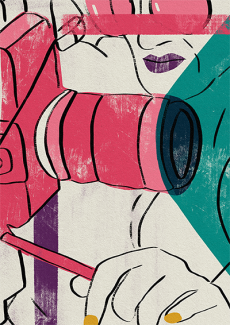
This journal edition in partnership with Kohl: a Journal for Body and Gender Research, will explore feminist solutions, proposals and realities for transforming our current world, our bodies and our sexualities.
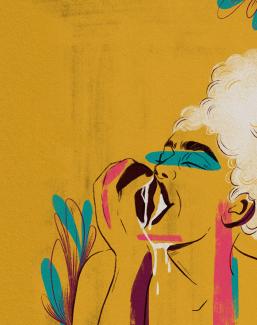
نصدر النسخة هذه من المجلة بالشراكة مع «كحل: مجلة لأبحاث الجسد والجندر»، وسنستكشف عبرها الحلول والاقتراحات وأنواع الواقع النسوية لتغيير عالمنا الحالي وكذلك أجسادنا وجنسانياتنا.
Hevrin Khalaf était une grande dirigeante politique kurde de Syrie dans la région autonome du Rojava, où les femmes kurdes risquent leur vie pour résister aux offensives turques et pour bâtir un système féministe.
Elle a travaillé en tant que secrétaire-générale du Parti du Futur de la Syrie, un groupe qui souhaitait construire des ponts, réconcilier les différents groupes ethniques et mettre sur pied une « Syrie démocratique, pluraliste et décentralisée ».
Véritable symbole de cet effort de réconciliation, elle a également oeuvré à la promotion de l’égalité entre les femmes et les hommes et fut représentante auprès des journalistes en visite, des humanitaires et des diplomates.
Hevrin a de plus été diplômée en tant qu’ingénieure civile, à la ville de Derik, ainsi que l’une des fondatrices de la Fondation pour la Science et la Libre pensée en 2012.
Elle a été torturée et assassinée le 12 octobre 2019 par la milice Ahrar al-Sharqiya, soutenue par la Turquie, lors d’une opération militaire contre les Forces démocratiques syriennes dans le Rojava.
« L’assassinat de Khalaf est un tournant majeur dans l’histoire moderne de la Syrie, celui-ci ayant une fois de plus confirmé la validité du vieux proverbe kurde qui dit : « Il n’y a de véritable ami·e que la montagne ». Je serai toujours ami avec Khalaf et sa vision d’un monde meilleur. » – Ahed Al Hendi
par Fatima B. Derby
En 2017, la campagne #ManifestezVotreSolidarité a mis en évidence la manière dont les jeunes féministes pouvaient construire un avenir féministe en étant là les unes pour les autres, en participant à des conversations transrégionales, en marchant en solidarité avec d'autres activistes et en collaborant entre les mouvements. (...)
< illustration : « Laisse-les pousser », par Gucora Andu
✉️ Sur inscription pour les grands groupes. Espace ouvert pour les petits groupes. Inscrivez-vous ici
📅 Mardi 11 mars 2025
🕒12.00h-14.00h et 16.00h-18.00h EST
🏢 Chef's Kitchen Loft with Terrace, 216 East 45th St 13th Floor New York
Organisé par : AWID
¿Qué significa un Foro de AWID para las personas que estuvieron ahí? ¿Qué es esta magia que sucede cuando feministas de todo el mundo se reúnen para celebrar, elaborar estrategias, aprender y compartir la alegría?
AWID habló con más de cuarenta participantes del Foro para oír sus historias de las transformaciones que experimentaron ellxs mismxs como activistas, y que también cambiaron a sus organizaciones y a los movimientos a los que pertenecen. También aprendimos sobre qué cosas deberíamos mantener y desarrollar para que un Foro de AWID sea diferente, y de qué manera podemos mejorar.
Este informe contiene aprendizajes y consejos invaluables para cualquier persona que quiera organizar encuentros presenciales regionales y temáticos, y para nosotrxs en nuestro trabajo de planificación del 15° Foro Internacional de AWID.
Diana Isabel Hernández Juárez was a Guatemalan teacher, human rights defender and environmental and community activist. She was the coordinator of the environmental program at Our Lady of Guadalupe Parish on the South coast of the country.
Diana dedicated her life to co-creating environmental awareness, working especially closely with local communities to address environmental issues and protect natural resources. She initiated projects such as forest nurseries, municipal farms, family gardens and clean-up campaigns. She was active in reforestation programmes, trying to recover native species and address water shortages, in more than 32 rural communities.
On 7 September 2019, Diana was shot and killed by two unknown gunmen while she was participating in a procession in her hometown. Diana was only 35 years old at the time of her death.
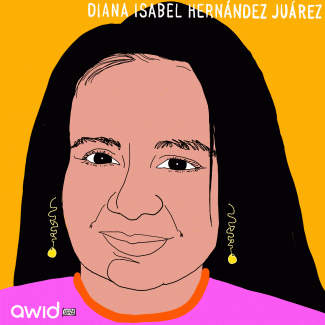
by Gabriela Estefanía Riera Robles
Juliana. How I would love to be called Juliana! The name is full of power and presence, full of force and vehemence. (...)
< artwork by Borislava Madeit and Stalker Since 1993
✉️ Sur inscription uniquement. Inscrivez-vous ici
📅 Mercredi 12 mars 2025
🕒 17.00h-19.00h EST
🏢 Chef's Kitchen Loft with Terrace, 216 East 45th St 13th Floor New York
Organisé par : Women Enabled International et AWID